Luck on a Plate: Why Southerners Eat Collard Greens and Black-Eyed Peas on New Year’s Day
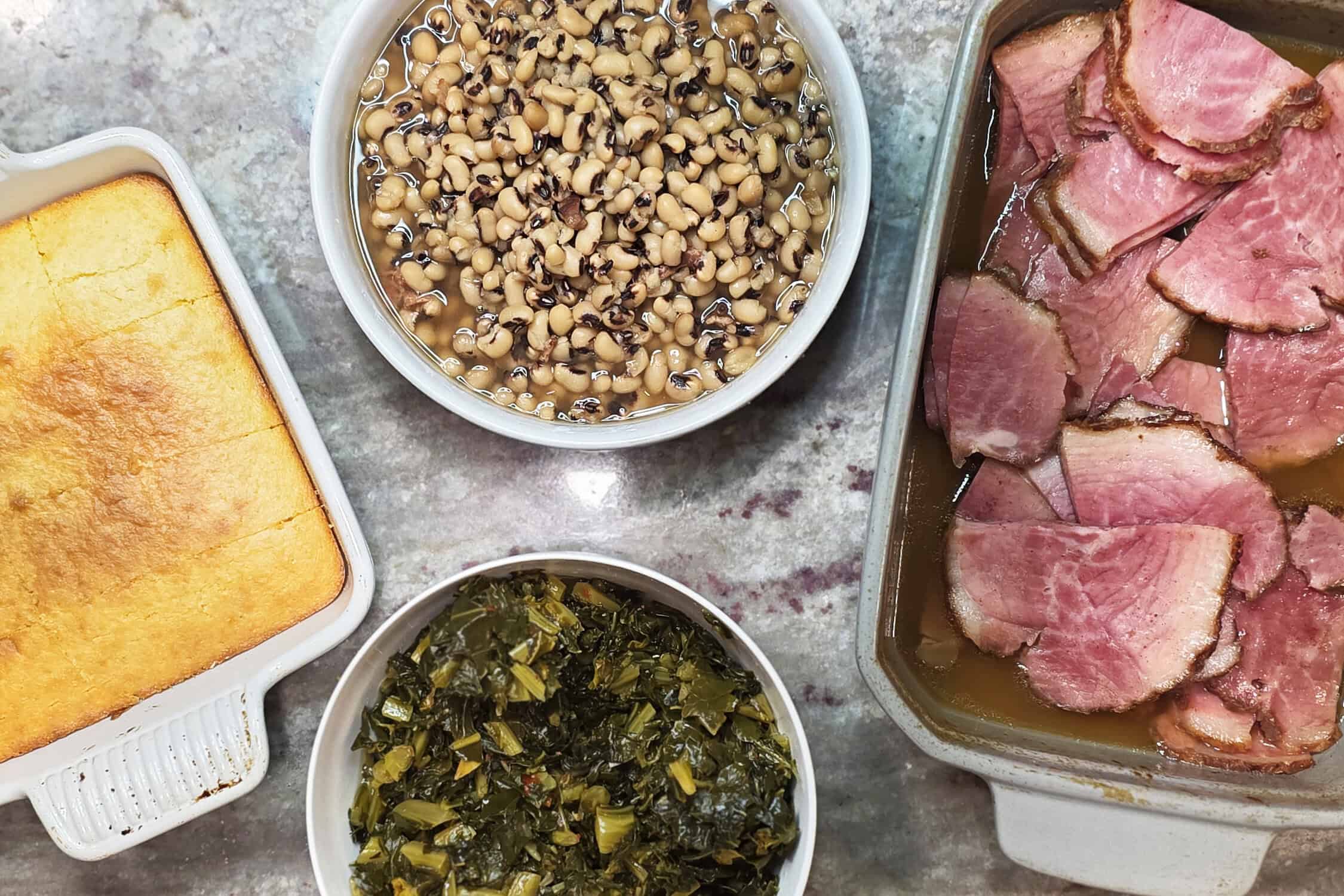
For many families across the American South, the first meal of the new year is more than just comfort food. It’s tradition. A plate piled high with collard greens, black-eyed peas, cornbread, and a little bit of pork is believed to bring luck and prosperity in the year ahead. While recipes and seasonings vary from family to family, the symbolism behind this New Year’s meal has been passed down for generations. Each food carries meaning, and together they form what many Southerners lovingly call a “lucky plate.”
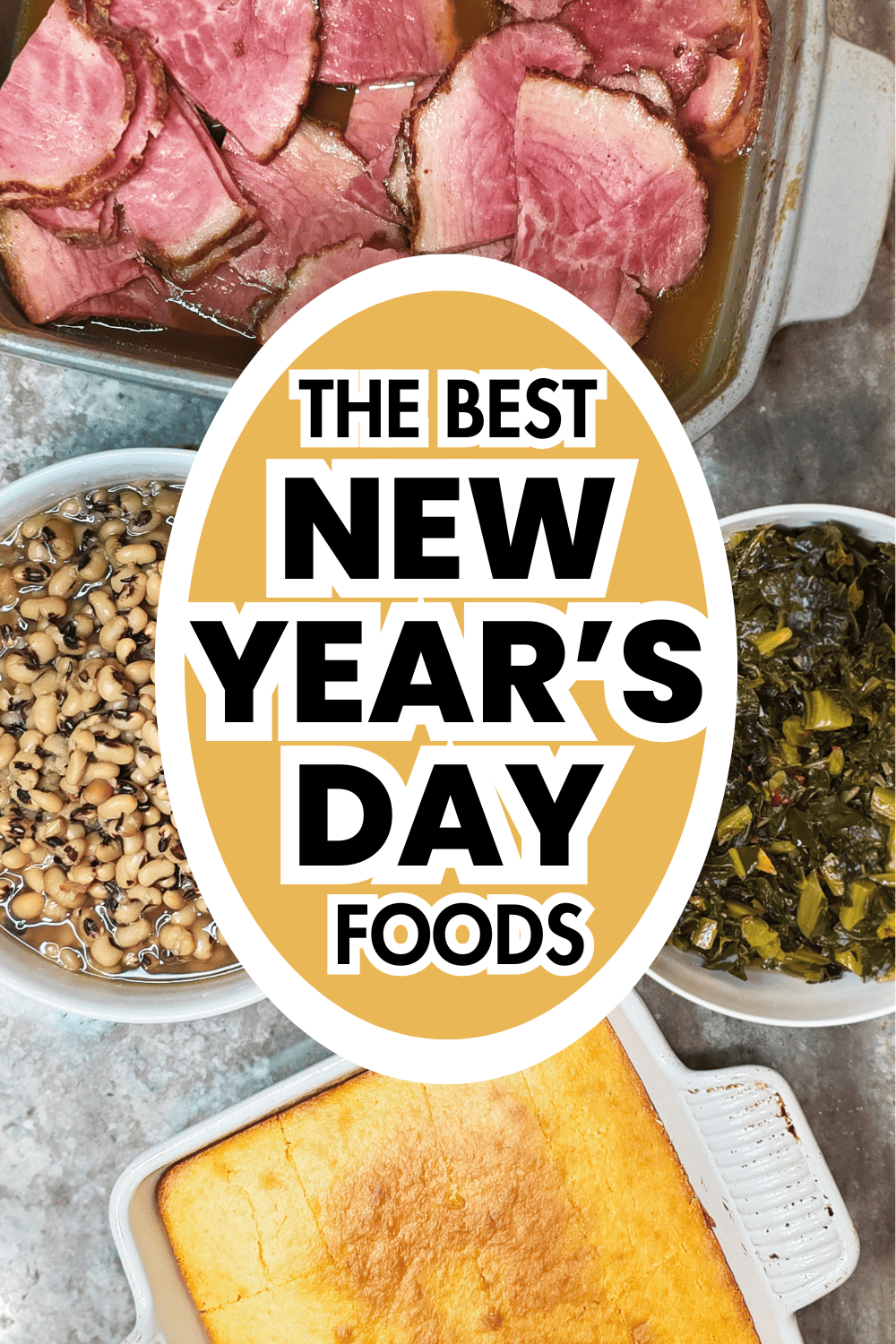
Why Black Eyed Peas and Collard Greens Matter
For some people in the southern United States, eating these foods on New Year’s Day is a habit. For others, it’s a meaningful New Year’s tradition with great significance and/or some superstition.
Growing up in my family, I knew we always ate these specific foods on January 1st, but I didn’t really understand the history or the traditions beyond being told they were “good luck food.”
But now that I’ve done some digging, here’s a short summary of what each food means:
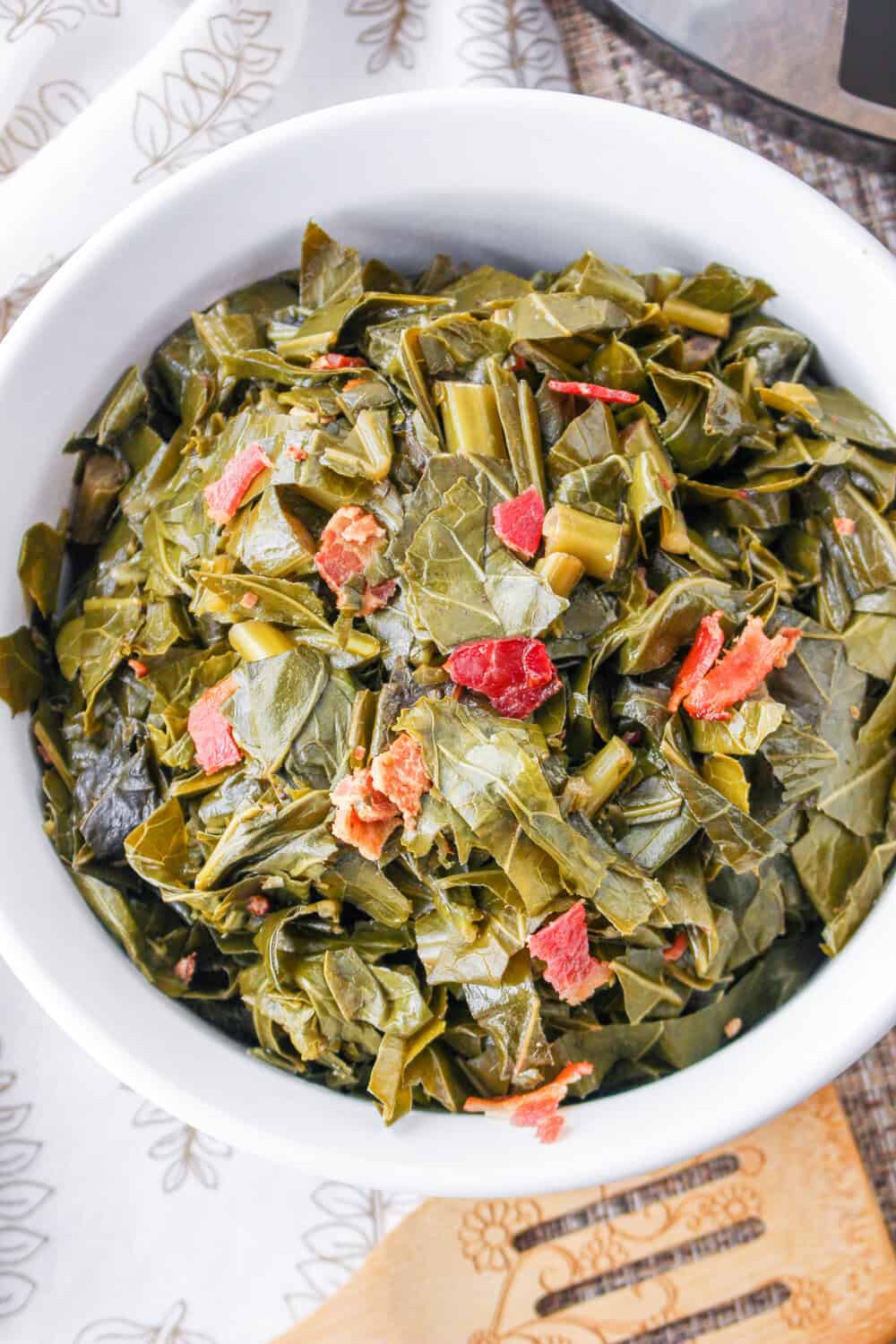
Collard Greens: A Symbol of Prosperity
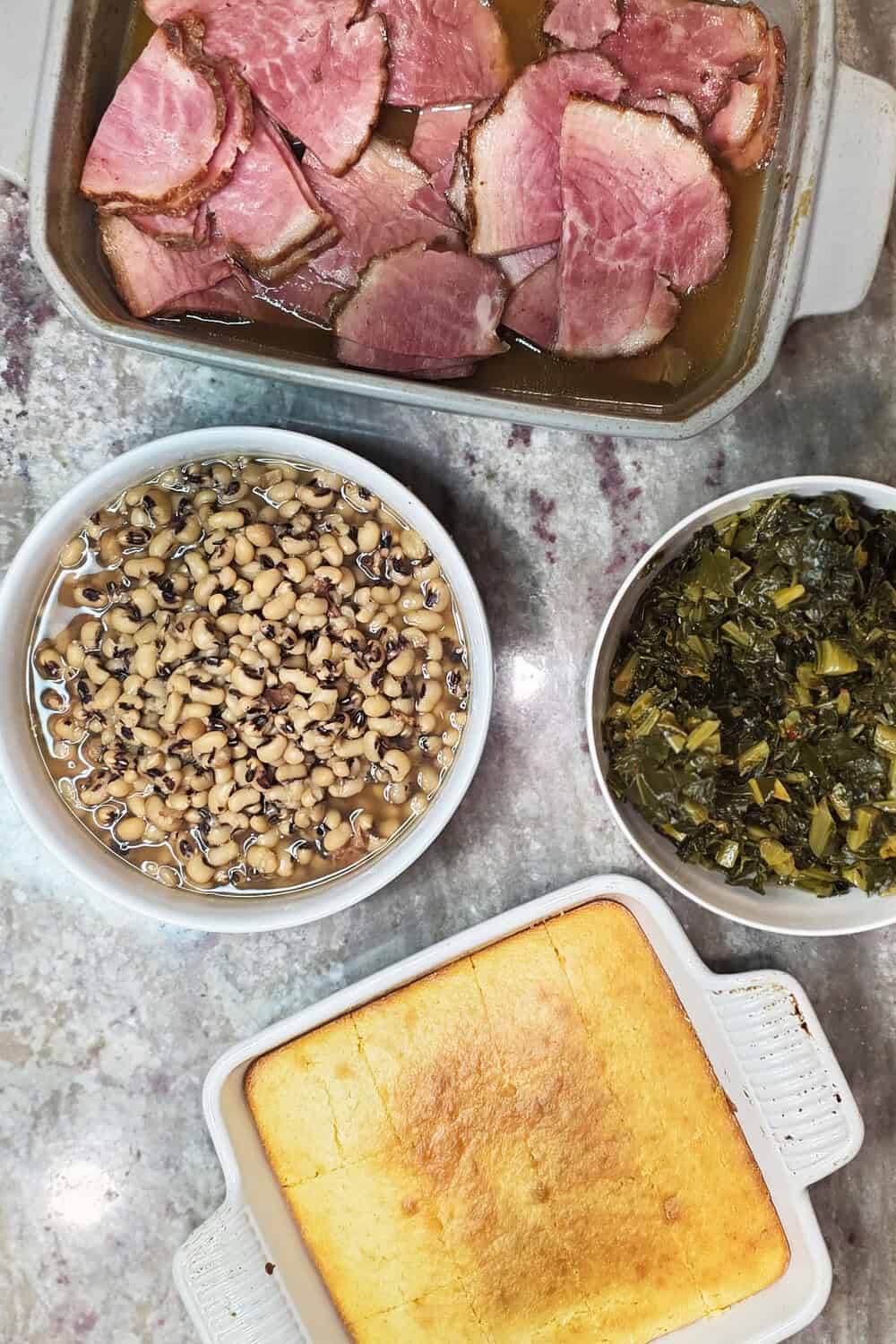
Collard greens have long been associated with money and financial abundance. Their green color and flat, folded leaves resemble paper money (dollar bills), making them a natural symbol of wealth and steady growth. Serving greens on New Year’s Day is not only a southern tradition but also a way of wishing for financial stability, prosperity, and blessings in the coming year.
Black Eyed Peas: Coins and Good Fortune
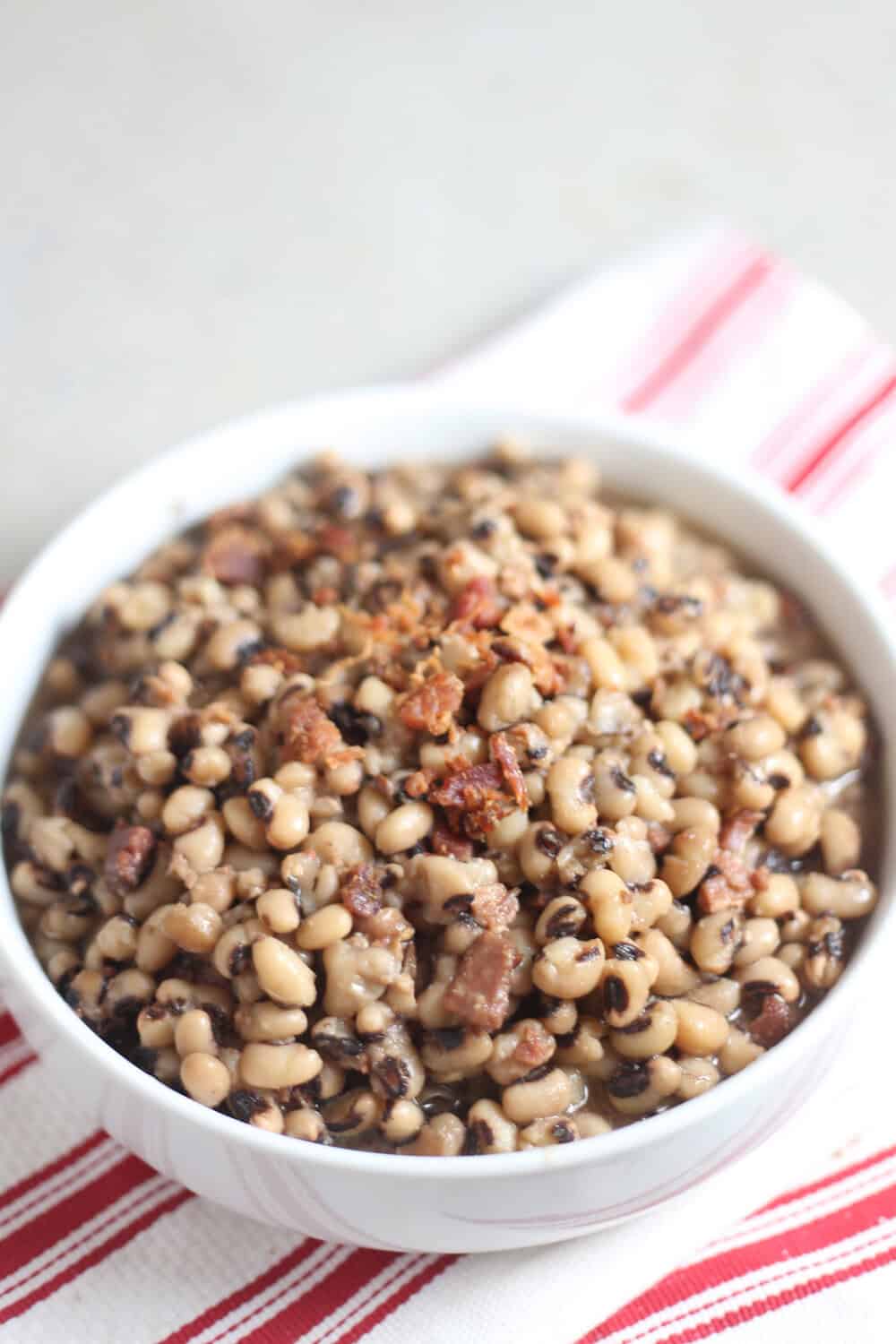
Black-eyed peas are thought to represent coins because of their small, round shape. Eating them on New Year’s Day is believed to bring good luck, and many families insist that everyone must eat at least a spoonful to ensure a lucky year. In some households, the more peas you eat, the better your luck will be.
Cornbread: Wealth & Gold
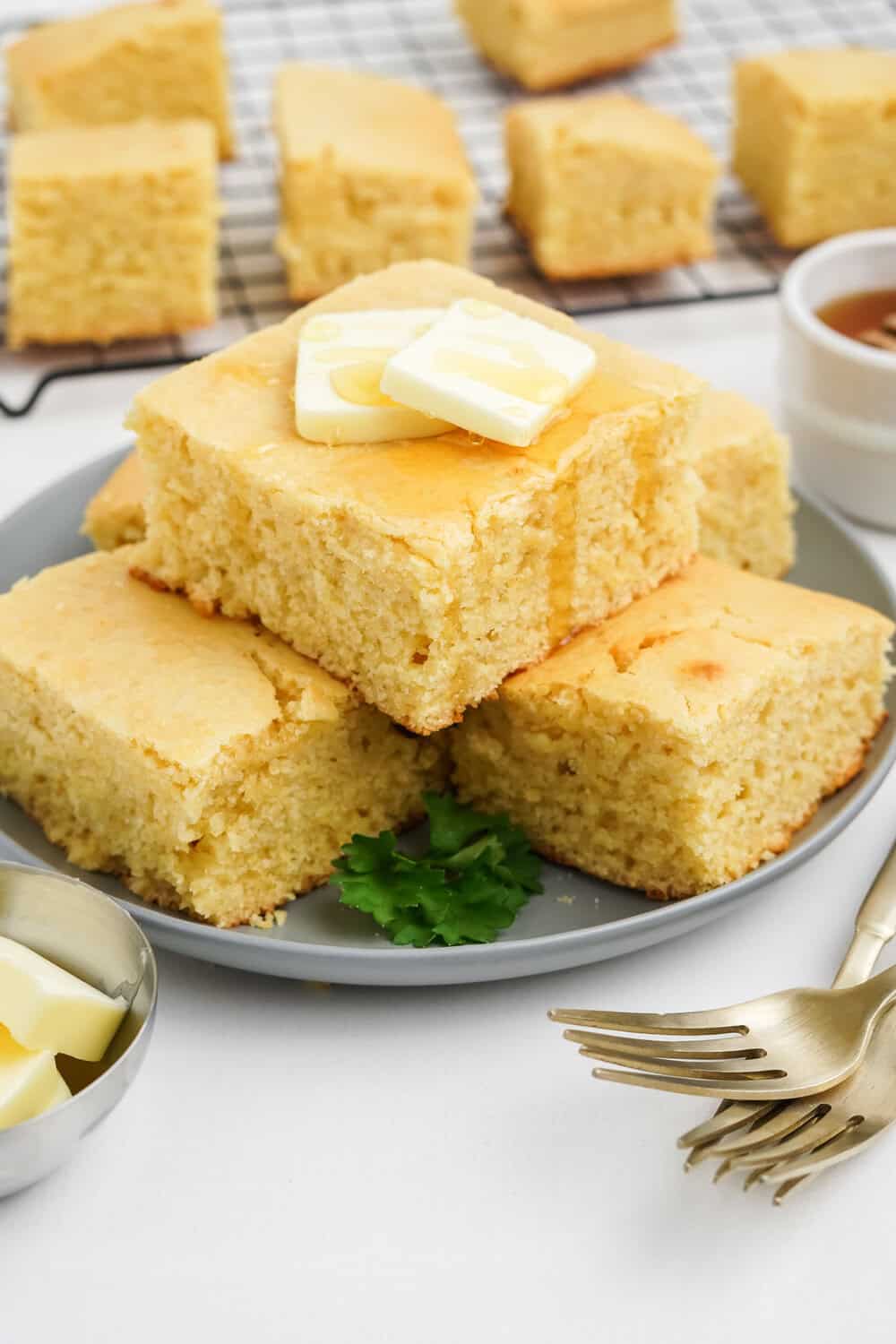
Cornbread completes the lucky plate. Its golden color and hearty texture are said to represent wealth and good fortune, rounding out the trio of symbolic foods: greens for money, peas for coins, and yellow cornbread for gold. I have made both traditional southern cornbread and sweet honey cornbread with our New Year’s Day meal – both are delicious!!
Pork
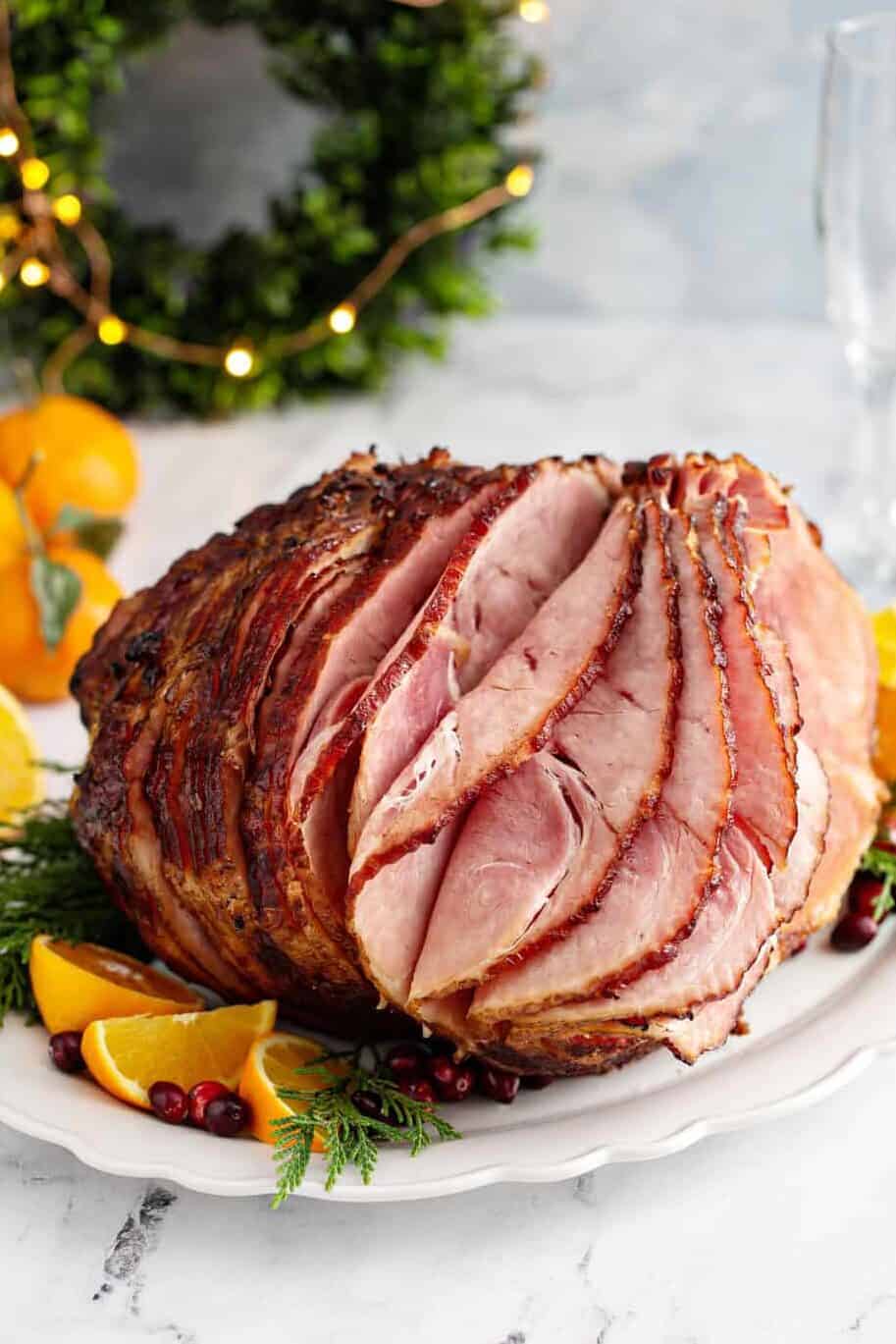
Pork plays an important role in many Southern New Year’s meals, often in the form of ham, ham hocks, bacon, or hog jowls used to season greens and peas.
This sounds like a stretch to me, but Google says pigs root forward when they forage, which is why pork symbolizes progress and advancement. It represents moving ahead rather than looking back. For our family, any pork would do. We’d have anything from glazed ham to pork sausage to bacon pieces in our peas or greens.
Where the Tradition Comes From
The roots of this New Year’s meal stretch back centuries.
West Africans and their Influence
Many historians trace the tradition to West African foodways brought to the Americas by enslaved people. Cowpeas, which include black-eyed peas, and leafy greens were staple foods in West Africa. The practice of assigning symbolic meaning to food carried into Southern culture, where it became deeply rooted – especially as a New Year’s custom.
Southern and African American Foodways
Over time, these foods became staples in enslaved communities and later in Black and rural Southern households. They were affordable, nutritious, and easy to store, making them practical as well as meaningful. Their symbolism grew stronger with each generation.
Civil War Folklore
One popular legend connects the tradition to the Civil War. According to folklore, Union soldiers raided Southern towns but left behind black-eyed peas and salted pork, believing them to be animal feed. Southerners survived on what remained and came to see the peas as a sign of good fortune. While the story is partly a legend, it remains an important part of cultural memory.
How the Black Eyed Peas and Collard Greens Are Traditionally Prepared
Southern New Year’s dishes are simple, slow-cooked, and full of flavor.
Black-eyed peas are typically simmered or cooked in a slow cooker with onion, garlic cloves, and one very important ingredient: pork (bacon pieces, bacon grease, or a ham hock are common). My favorite way to prepare them is to use dry beans and cook them in my Instant Pot. This recipe is one of my most popular for our New Year’s Day celebration.
Collard greens are often started on New Year’s Eve and cooked low and slow with stock, onion, and smoked meat, then finished with a splash of vinegar for balance. I use this slow cooker recipe with a tiny bit of red pepper flakes for extra flavor. If you choose to do collard greens, be sure to save the pot liquor (aka seasoned broth) and soak it up with your cornbread.
Speaking of cornbread, this southern staple is most often baked in a hot cast-iron skillet until golden and crisp around the edges. Savory cornbread is most popular where I live, but in other places, people swear by sweetened cornbread or Honey Cornbread.
Common additions include hot sauce, pickled vegetables, rice, or dishes like Hoppin’ John, a Lowcountry favorite made with black-eyed peas and rice. Some families also serve ham, cabbage, turnip greens, or sweet potatoes alongside the traditional foods.
Regional Variations
Like most Southern traditions, there’s no single “right” way to prepare a New Year’s meal. Some families add tomatoes to their peas, and others swear by smoky ham flavor. Greens may be seasoned with cider vinegar, hot pepper vinegar, or mustard, depending on region and family preference.
In some homes, a coin is hidden in the pot of peas for extra luck, and whoever finds it is said to have an especially fortunate year.
More Than Just Food
Eating collard greens and black-eyed peas with a few pieces of cornbread on New Year’s Day is a long-time tradition with a little superstition.
Whether you keep the tradition exactly as I’ve shared, how it was handed down to you, or you’re just hearing about this and want to start something new, I hope you’ll enjoy these delicious soul food classics at your New Year’s celebrations and enjoy a great day with your family and friends.
Happy New Year to you and your loved ones – I hope you enjoy a delicious shared meal, a hopeful heart, and a fresh start for the year ahead.