
How to Cut an Onion (6 Different Ways)
Learning how to cut an onion is one of the most important basic kitchen skills for beginner cooks and home chefs alike. Whether you need diced onions for soups, sliced onions for burgers, or minced onions for sauces and marinades, knowing the right cutting technique can make meal prep faster, safer, and easier.
In this step-by-step guide, I’m sharing 6 easy ways to cut an onion, including round slices, half-moon slices, julienne onions, diced onions, minced onions, and blended onions. You’ll also learn the difference between yellow onions, white onions, red onions, and sweet onions, plus simple tips for reducing tears while cutting onions.
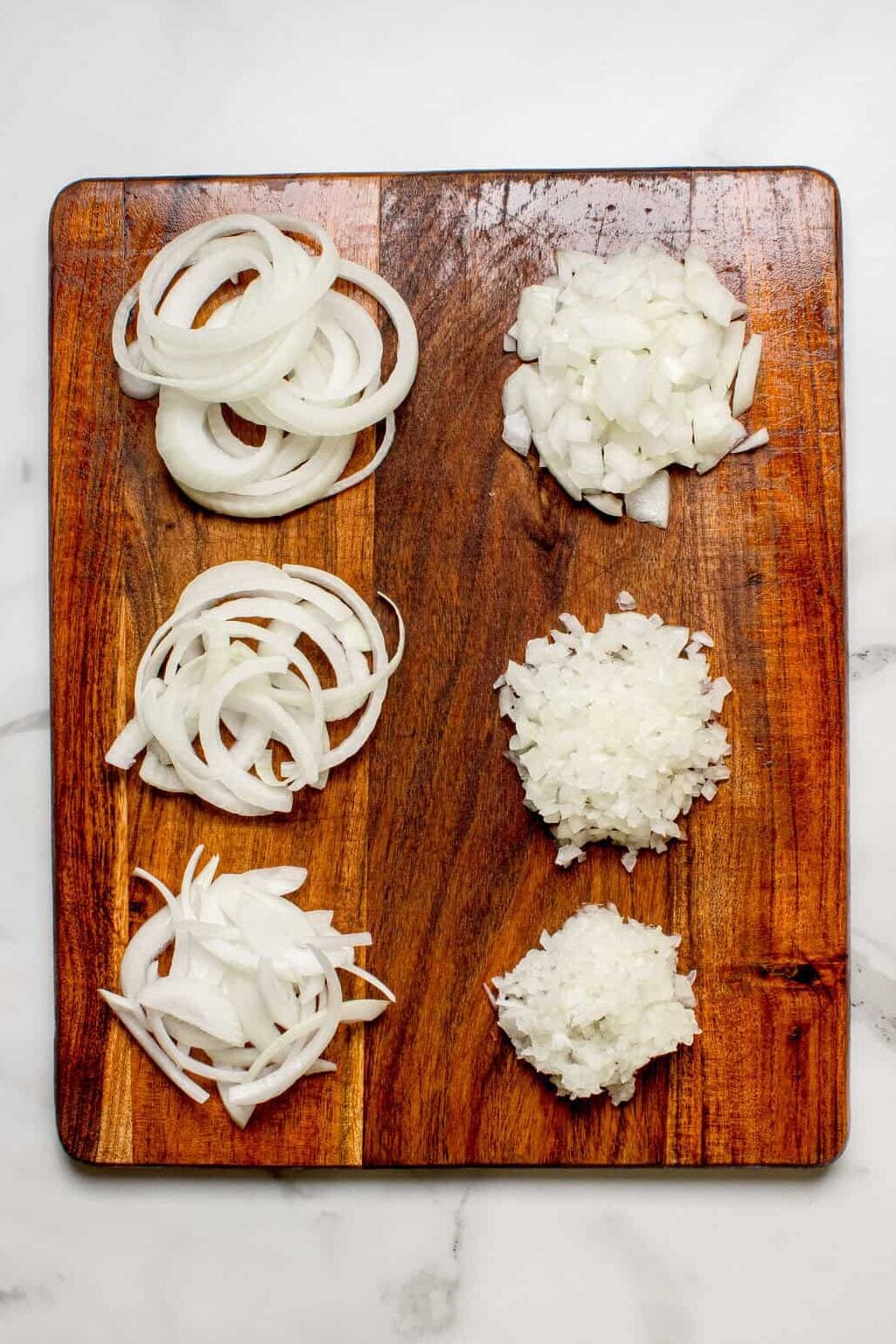
How to Cut an Onion
You may or may not know this, but I’m not a fan of onions. Specifically, raw onion. I don’t put it in my potato salad, and I often skip it in recipes like my Italian Grinders and I’d never eat a slice of onion on a burger.
But I do cook with onions, and learning how to cut an onion is one of the most useful kitchen skills for any home cook. Once you understand a few simple cutting techniques, handling onions will become easier, faster, and safer.
As you practice along with this guide, don’t worry if your cuts are not perfect at first. Knife skills take practice, and even experienced home cooks and chefs sometimes make uneven slices. At this moment, I recommend that you focus on safety and consistency before focusing on speed.
This guide will walk you through 6 beginner-friendly ways to cut an onion, including when to use each cut and how to do it step by step. Let’s get into it!
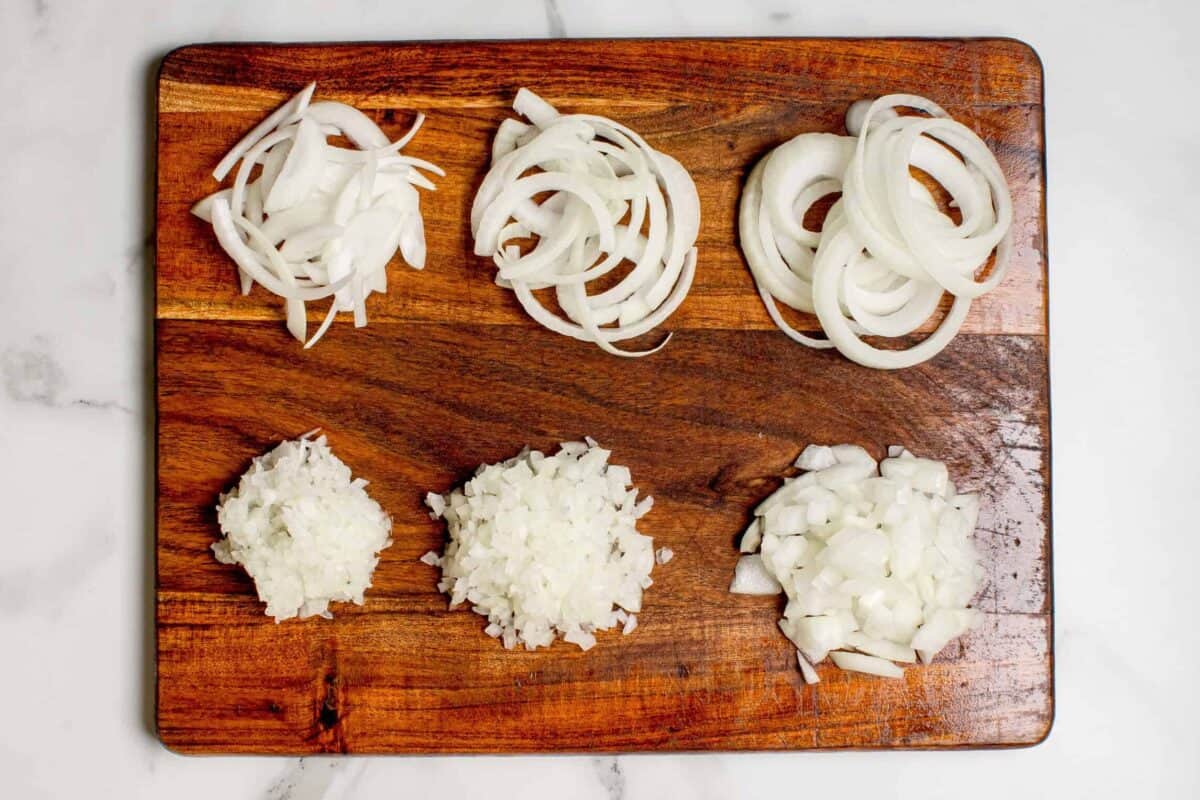
Tools & Equipment Needed
A sharp chef’s knife and a stable cutting board are the two most important tools for safely cutting onions. But I’m also sharing some other tips and ideas, and some optional items that would be convenient to have on hand.
- Chef’s knife
- Paring knife (optional)
- Cutting board
- Paper towels or kitchen towel
- Large mixing bowl or prep bowls (optional for storing cut onions)
- Food processor or blender (for blended onions)
- Onion goggles (optional)
Types of Onions
Before we get to the different ways to cut onions, let’s go over each type of onion and the dishes they’re good for.
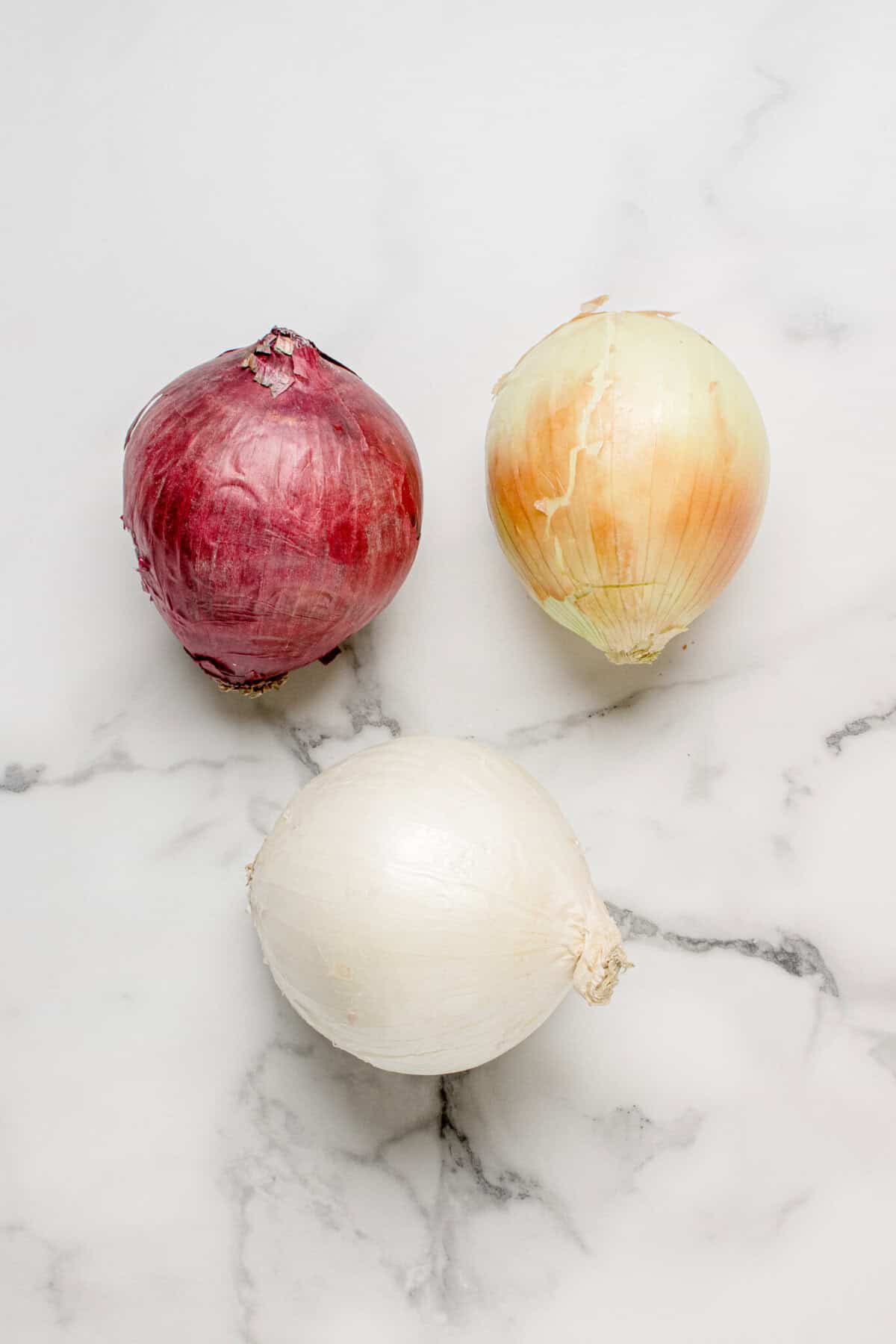
Yellow Onion: Yellow onions are among the most common types used in cooking. They tend to have a balanced flavor that becomes sweeter as they cook. They are great for soups, sauces, roasting, and everyday meals.
White Onion: White onions have a sharper, cleaner flavor and sometimes a more pungent odor. They are commonly used in tacos, salsas, and Mexican dishes. The pieces of onion look pretty, too, when they’re all diced up.
Red Onion: Red onions are slightly sweet and are often served raw in salads, sandwiches, burgers, and wraps. This is my husband’s favorite kind. I’ve also used them to make pickled onions for Sarah.
Sweet Onion: Sweet onions have a milder flavor and have a higher natural sugar content. They might look like a type of yellow onion, but they are a different category altogether. Sweet onions are great for caramelizing, grilling, and making onion rings.
Parts of an Onion
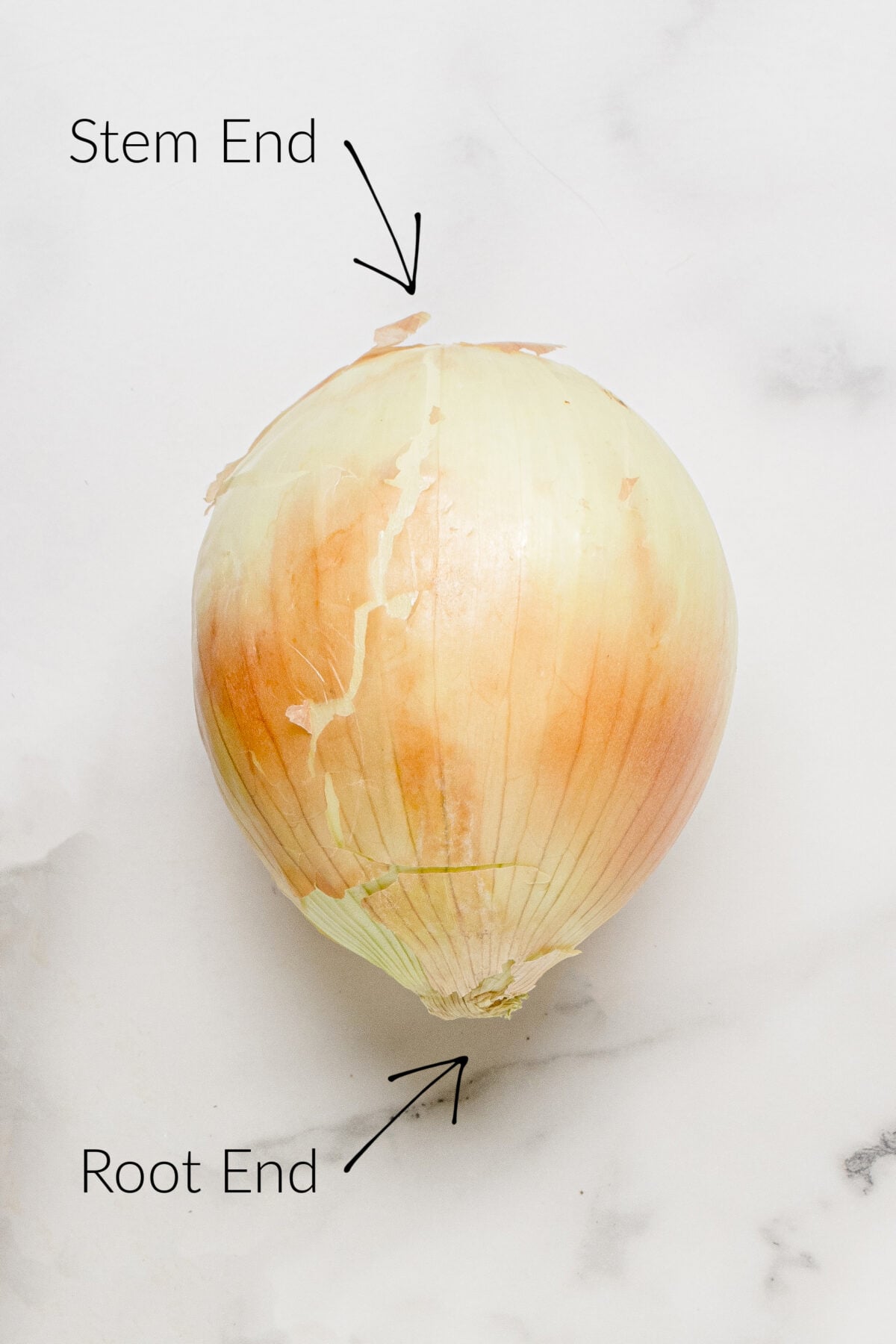
Let’s talk about 2 important parts of an onion, the root end and the stem end.
- The root end is the rough end with tiny roots attached.
- The stem end is the smoother top end.
Before You Start:
Use a Sharp Knife: A sharp knife is safer and easier to control than a dull knife. It also makes for cleaner slices instead of crushing or sawing the onion.
Stabilize the Onion: Whenever possible, I recommend placing the flat side of the onion against the cutting board so it does not roll while cutting. The last thing you wanna do is slice yourself.
Protect Your Fingers: Keep your fingertips curled inward slightly while slicing to help protect them from the knife. This tip can be used when cutting veggies.
Hold the Knife Comfortably: Hold the knife firmly but comfortably. Use your non-dominant hand to steady the onion while keeping your fingertips tucked inward gently.
Remove the Outer Layer: After peeling away the papery skin, remove the first outer layer if it feels dry or tough.
Why Do Onions Make You Cry?
Prepare yourself… I’m about to get a little science-y for a second.
When you cut into an onion, it releases sulfur compounds into the air. These compounds react with moisture in your eyes, creating a mild, irritating gas that triggers your eyes to produce tears as a natural defense. The more onion cells that are crushed or damaged, the more fumes are released.
That’s why the best way to prevent tears is to use a sharp knife. A dull knife crushes the onion rather than slicing it cleanly, releasing more of the irritating compounds from the onion’s cells that cause eye irritation.
How to Cut an Onion Without Crying
- Use a very sharp knife. See above.
- Chill the onion in the refrigerator for 15 to 30 minutes before cutting. Cold onions release fewer irritating fumes.
- Cut the onion near a running vent hood or fan to help blow the fumes away from your face.
- Leave the root end intact as long as possible while cutting, since the root contains the highest concentration of sulfur compounds.
- Wear onion goggles or glasses to help protect your eyes from the fumes.
- Cut onions near an open window for better airflow.
- Avoid leaning directly over the onion while slicing.
- Light a candle nearby. Some people believe the flame helps burn off some of the onion fumes before they reach their eyes.
- Soak the onion in cold water for a few minutes before cutting to slightly reduce the strength of the fumes.
- Breathe through your mouth, not your nose, while cutting onions.
- Use a food processor to finely chop onions, reducing hands-on cutting time.
- Wipe your knife and cutting board occasionally while cutting multiple onions to remove excess onion juices.
How to Prep an Onion (Standard Prep Steps)
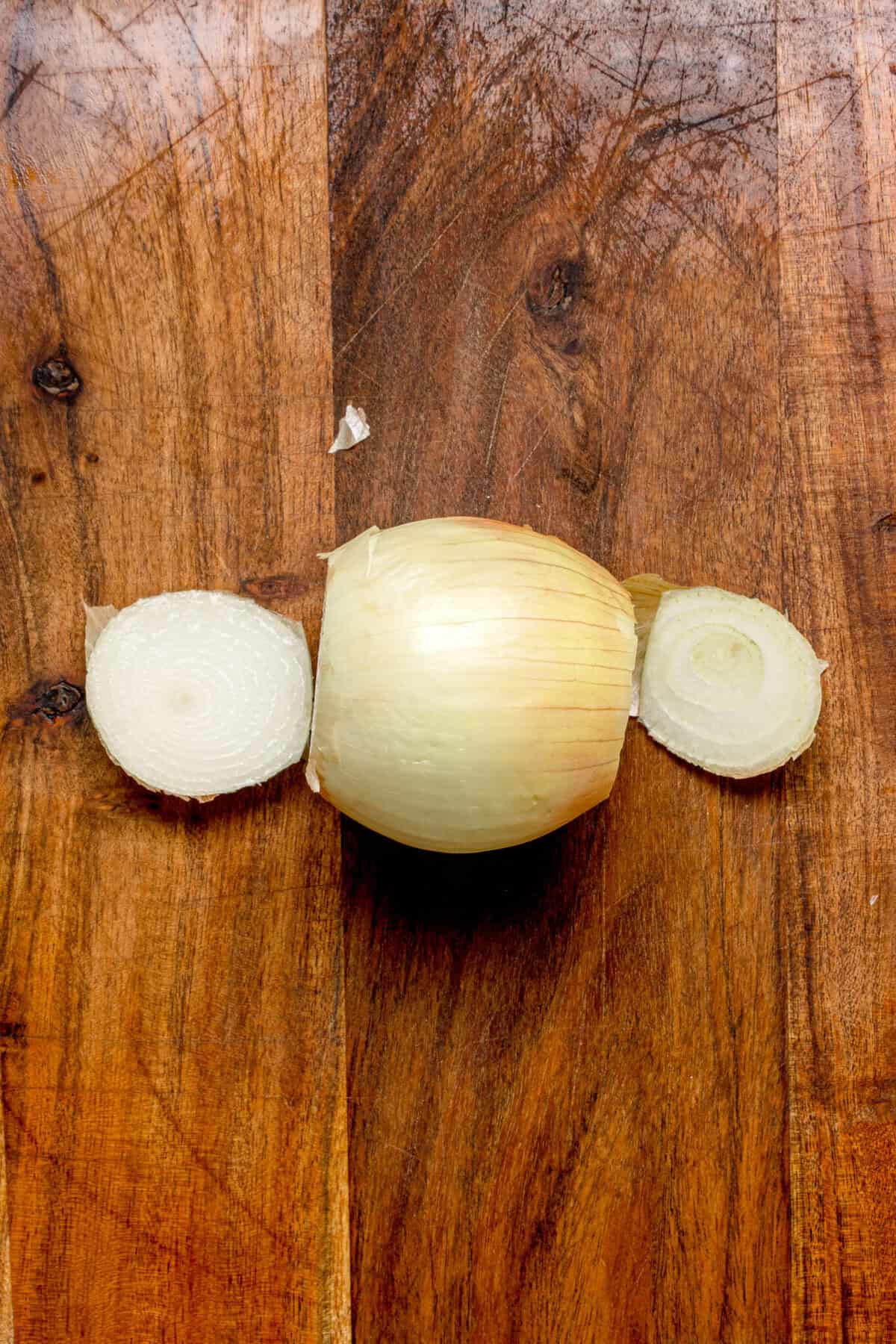
Most onion cuts start the same way. Most chefs say that the root end should stay attached throughout prepping and cutting, but I’ll show you a more practical way. The first step is to cut both ends:
- Place the whole onion on a cutting board or flat surface.
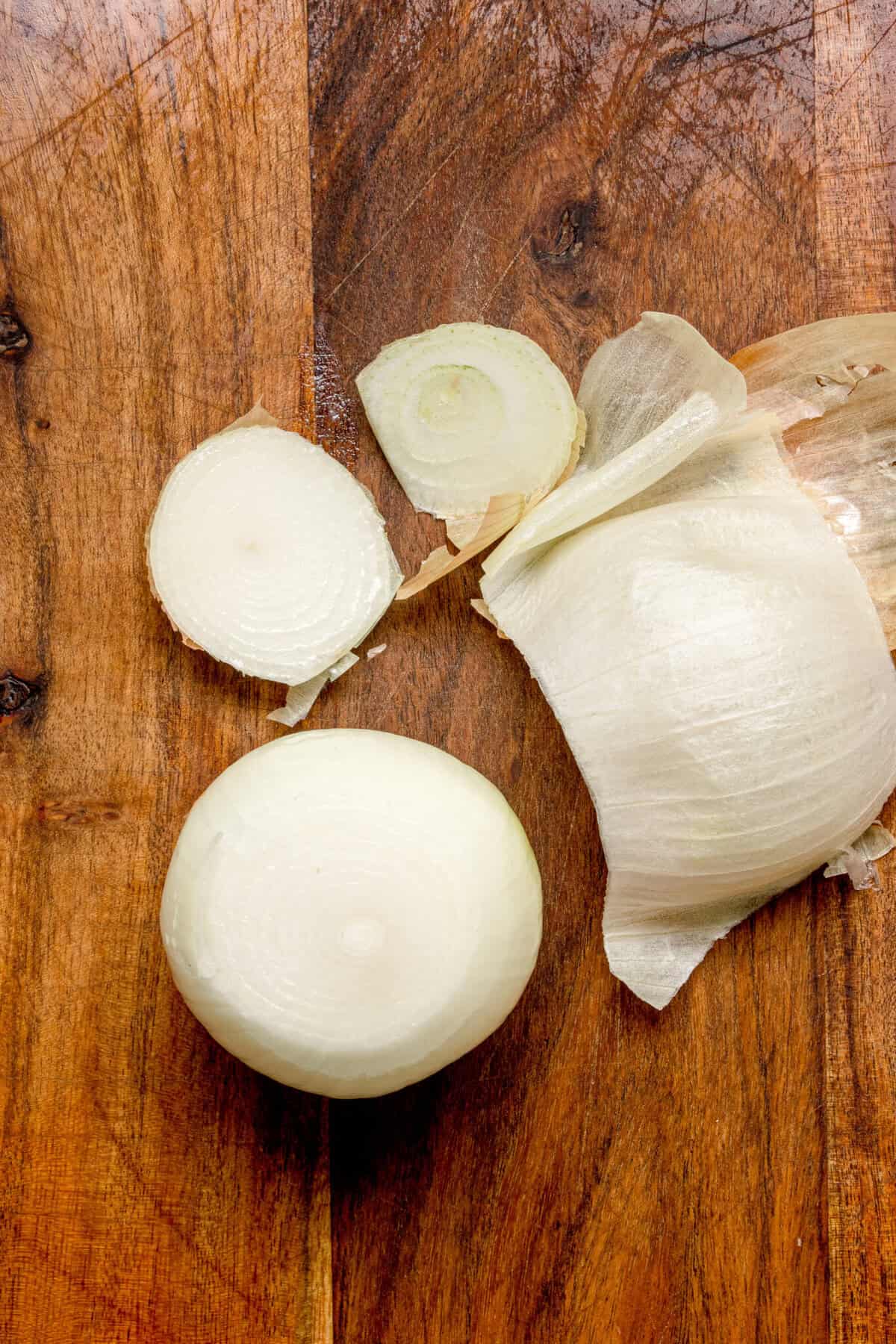
- Cut off the stem and root ends and peel away the skin.
- Remove the first outer layer (the papery peel) if it feels dry or tough.
Six Ways to Cut an Onion
1. Round Slices (Onion Rings)
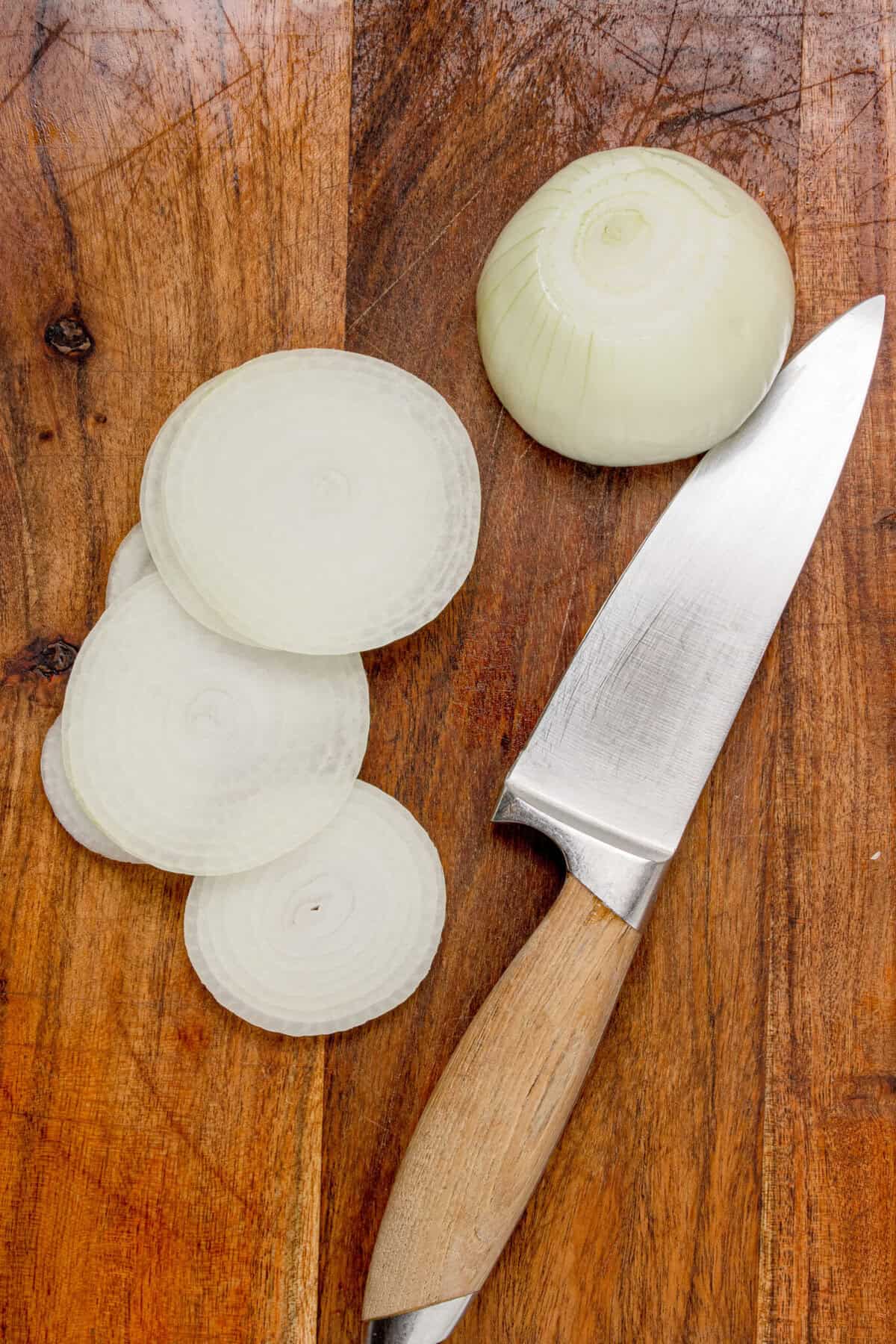
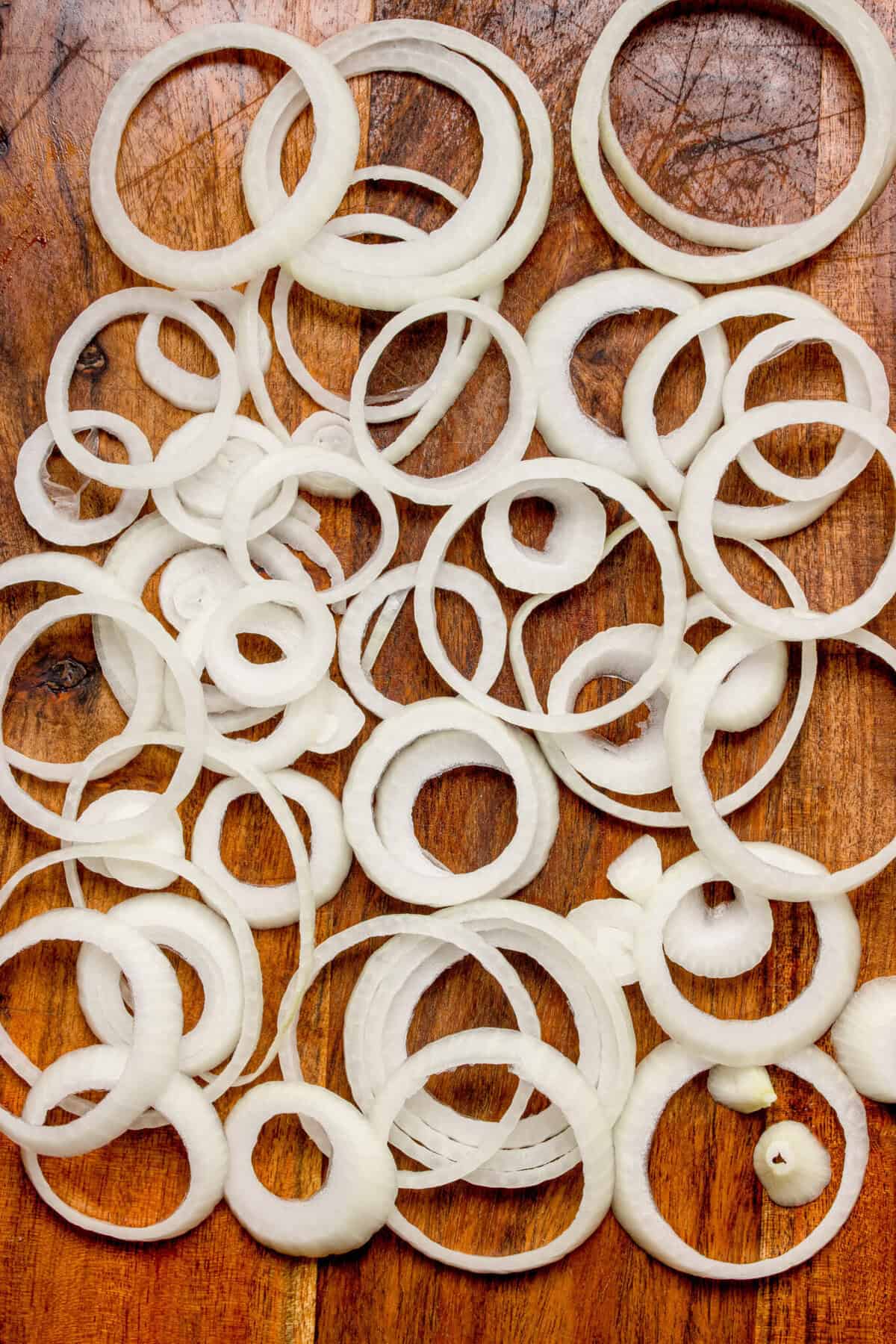
What They Look Like: Round onion slices create full circles or rings.
Full Rings are best for:
- Burgers
- Sandwiches
- Grilling
- Onion rings
Thickness Tips
- Thin slices work well for sandwiches and burgers.
- Thick slices hold up better on the grill.
How to Cut Round Onion Slices
Round slices are the one cut where you do not halve the onion first.
- Cut off the stem and root end of the onion.
- Peel away the skin. Remove the first outer layer if it feels dry or tough.
- Lay it on its side.
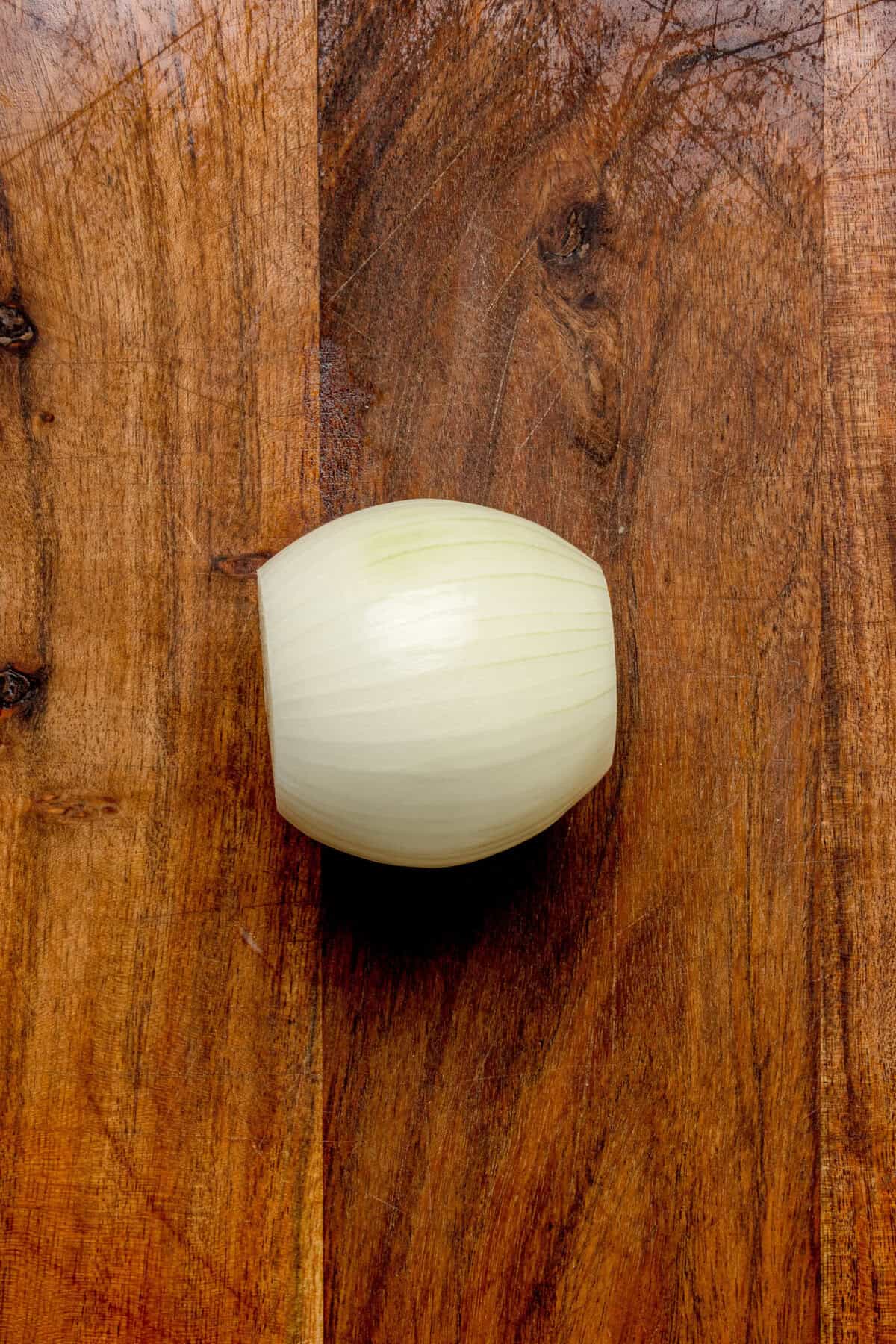
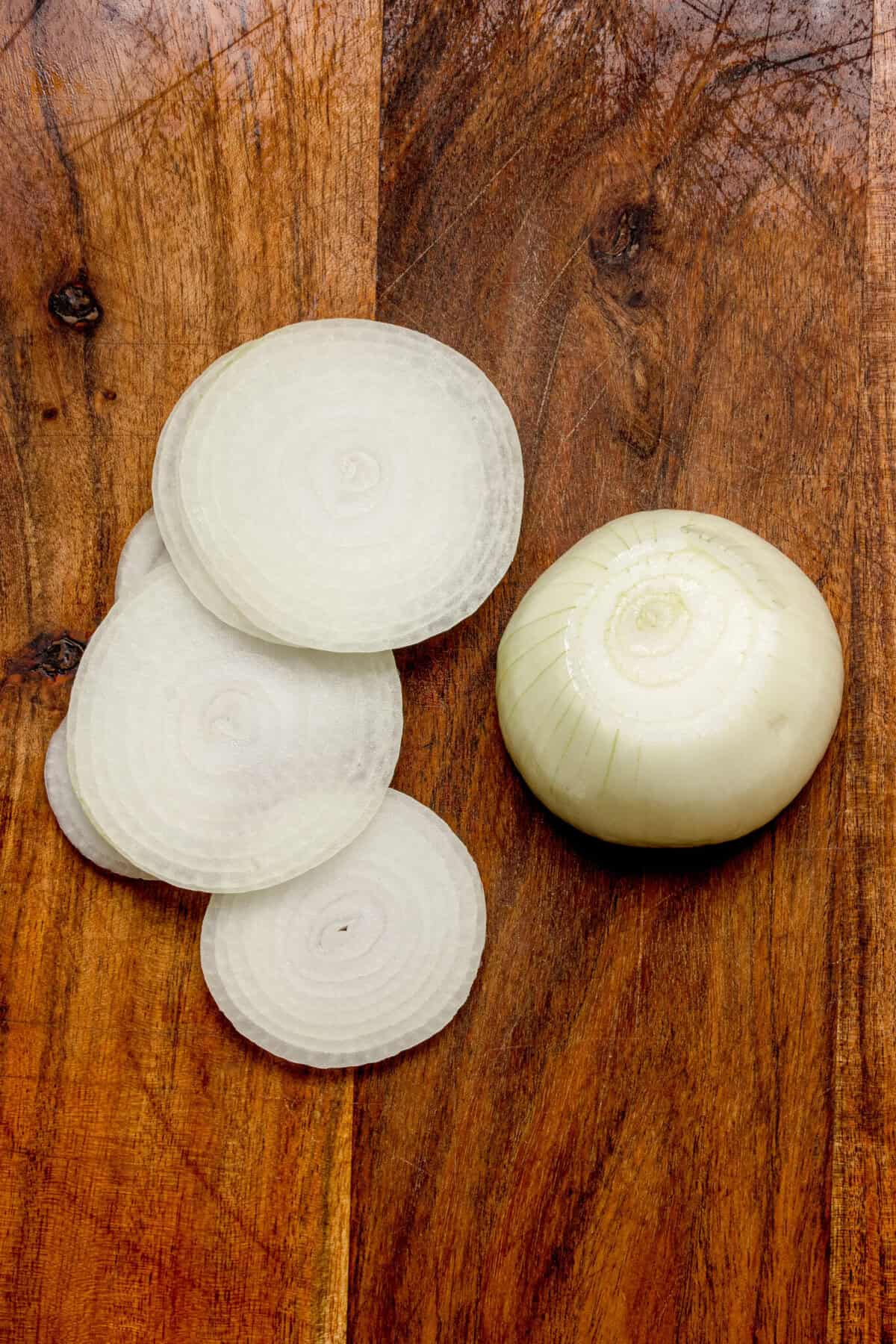
- Slice straight across the onion to create round slices.
- Separate the layers if you want rings.
- Slice as thin or thick as you like.
2. Half-Moon Slices
What They Look Like: Half moons are curved strips made from halved onions.
Best For
- Fajita
- Stir frys
- Soups
- Caramelized onions
Thickness Tips
- Thin slices cook down quickly.
- Medium slices are great for sauteing.
- Thick slices hold more texture.
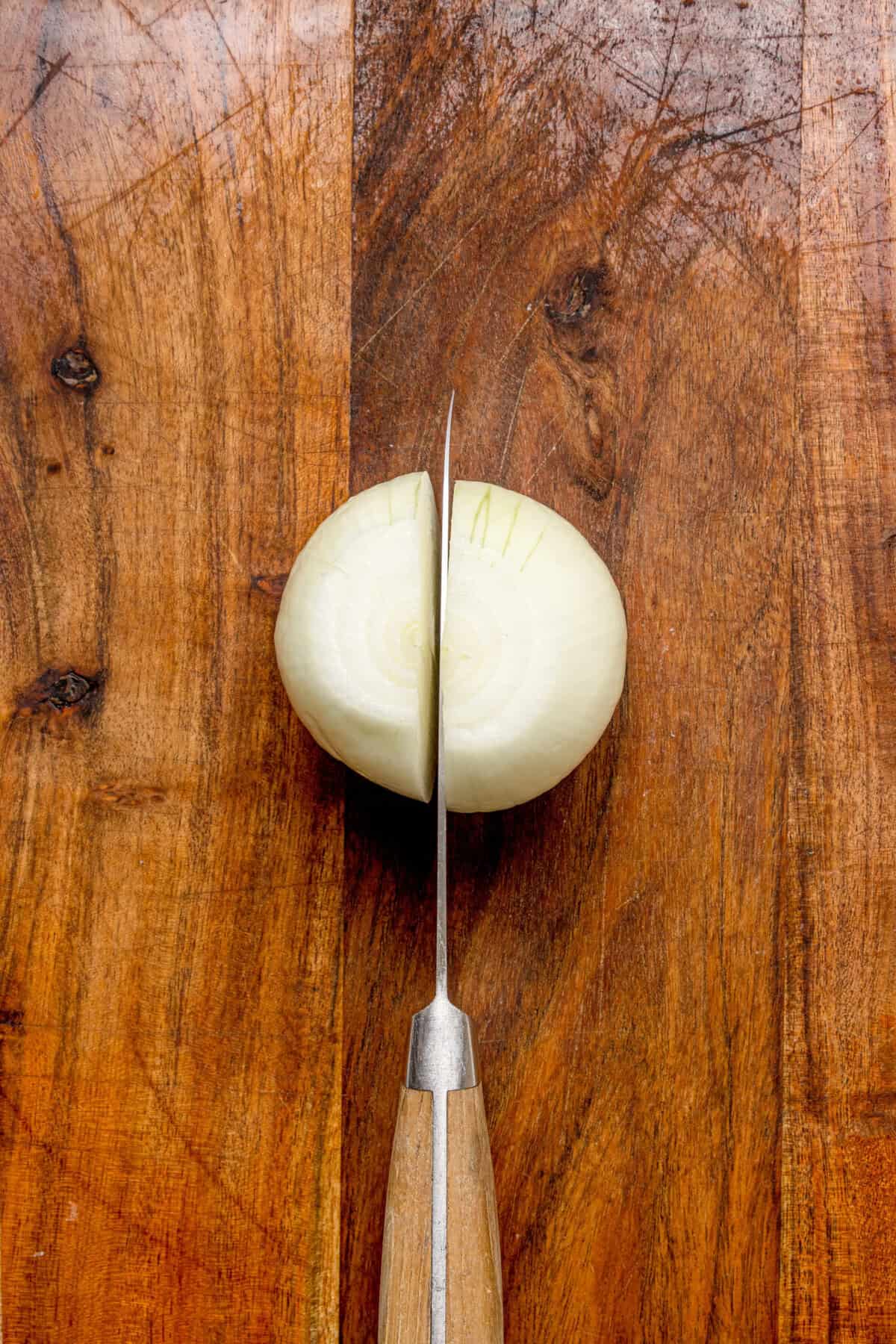
How to Cut Half-Moon Onion Slices
Follow the standard prep steps above before starting.
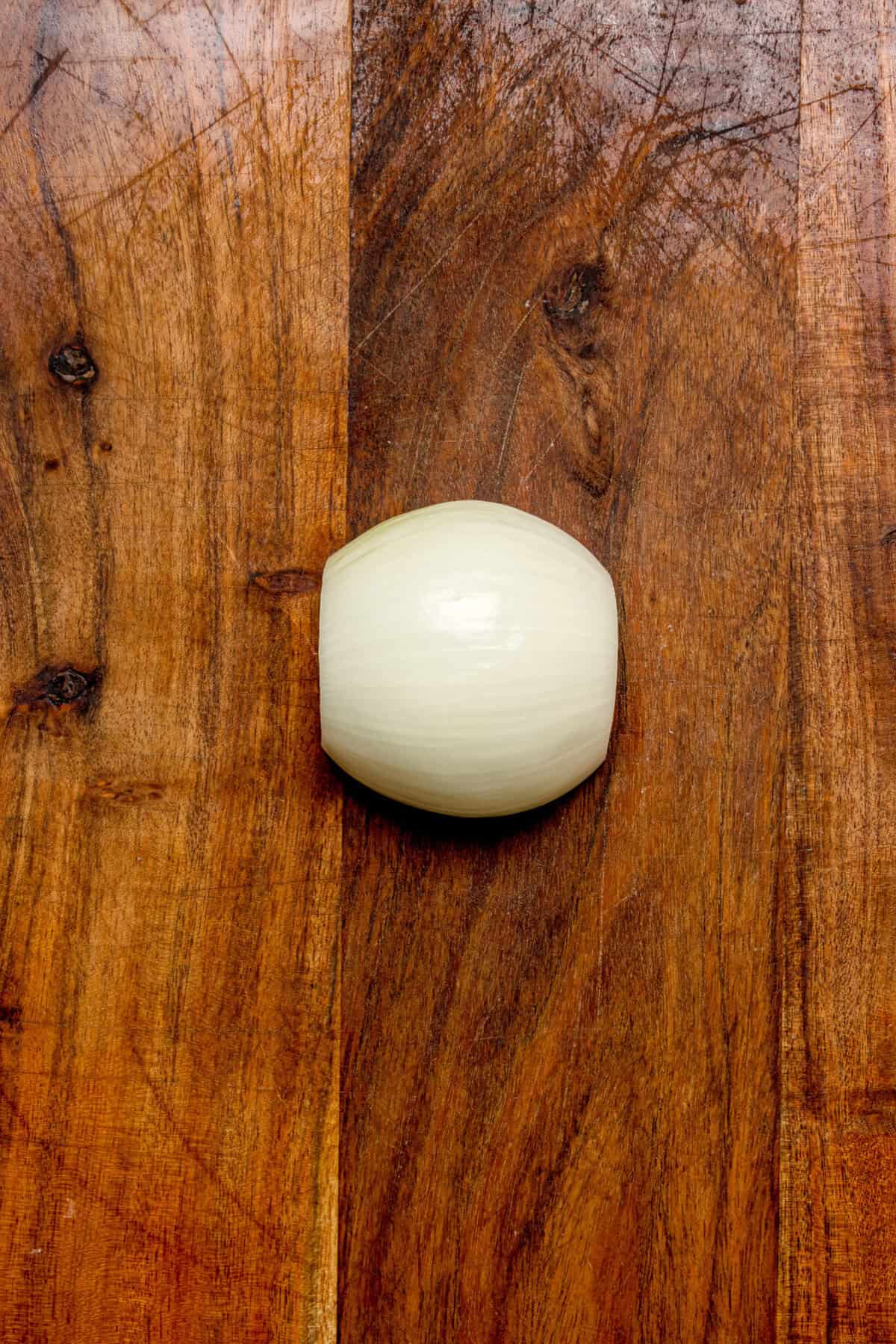
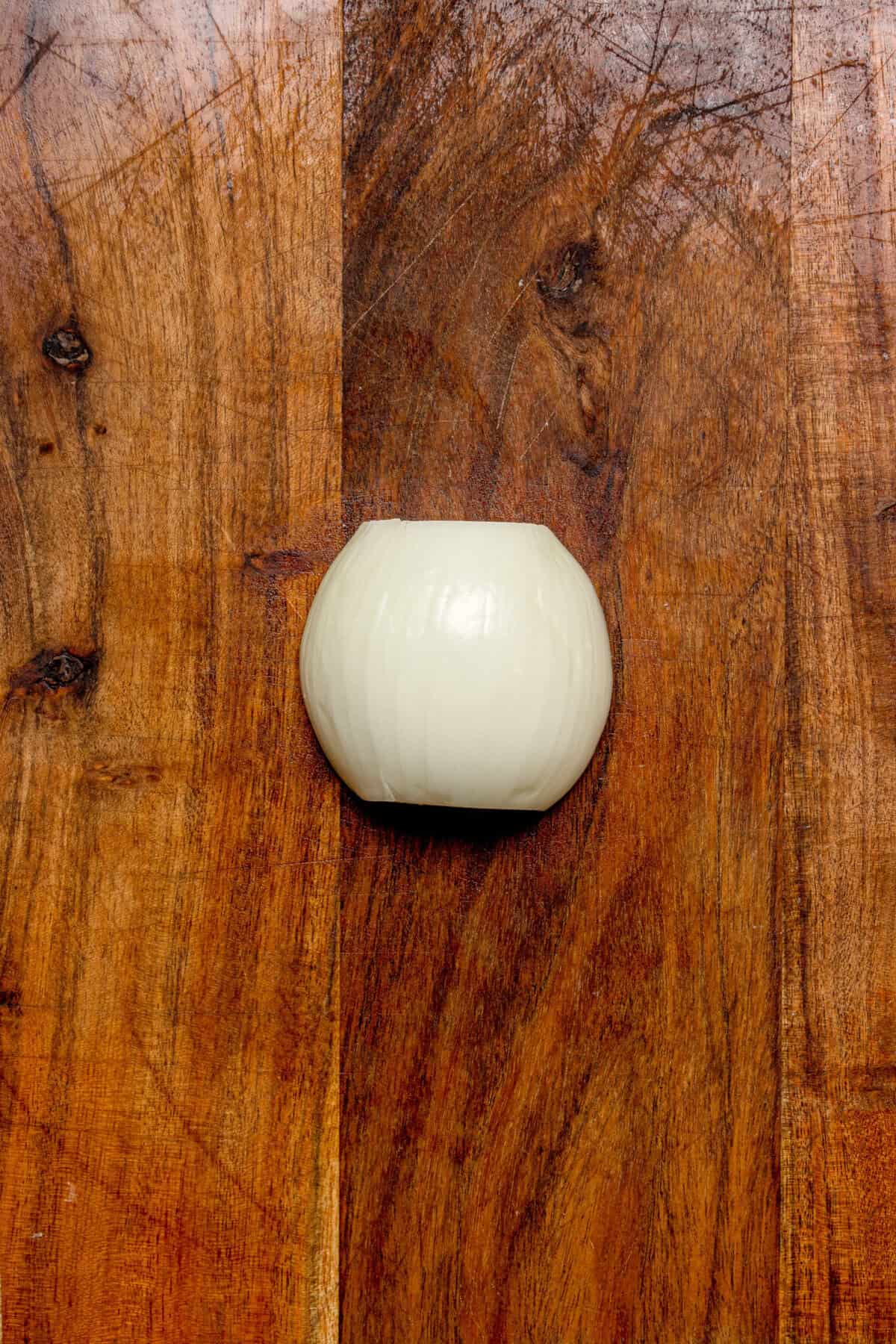
- Cut onion in half from the stem end down through the root.
- Place half of the onion flat-side down on the cutting board.
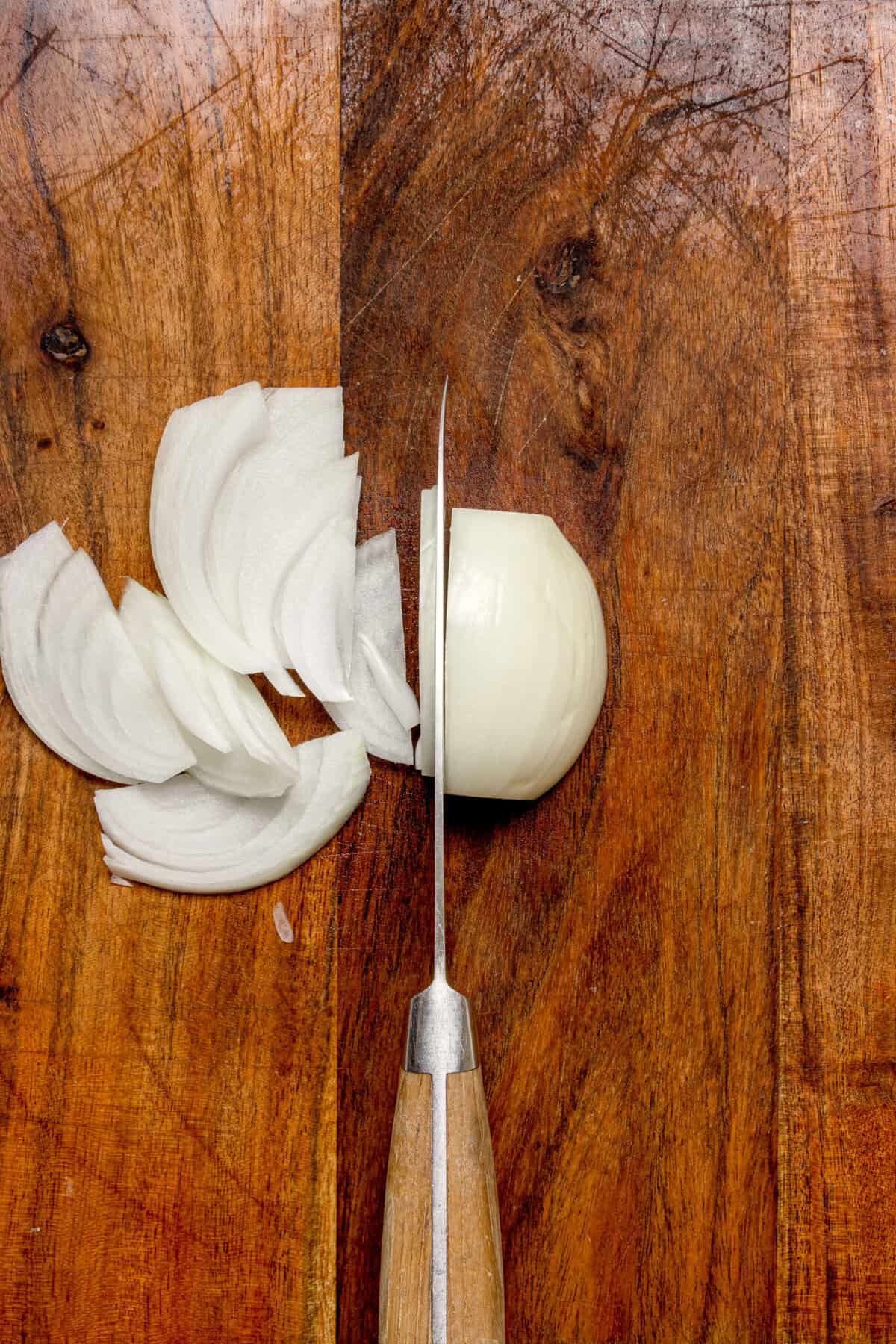
- Make vertical slices of the onion from one side to the other.
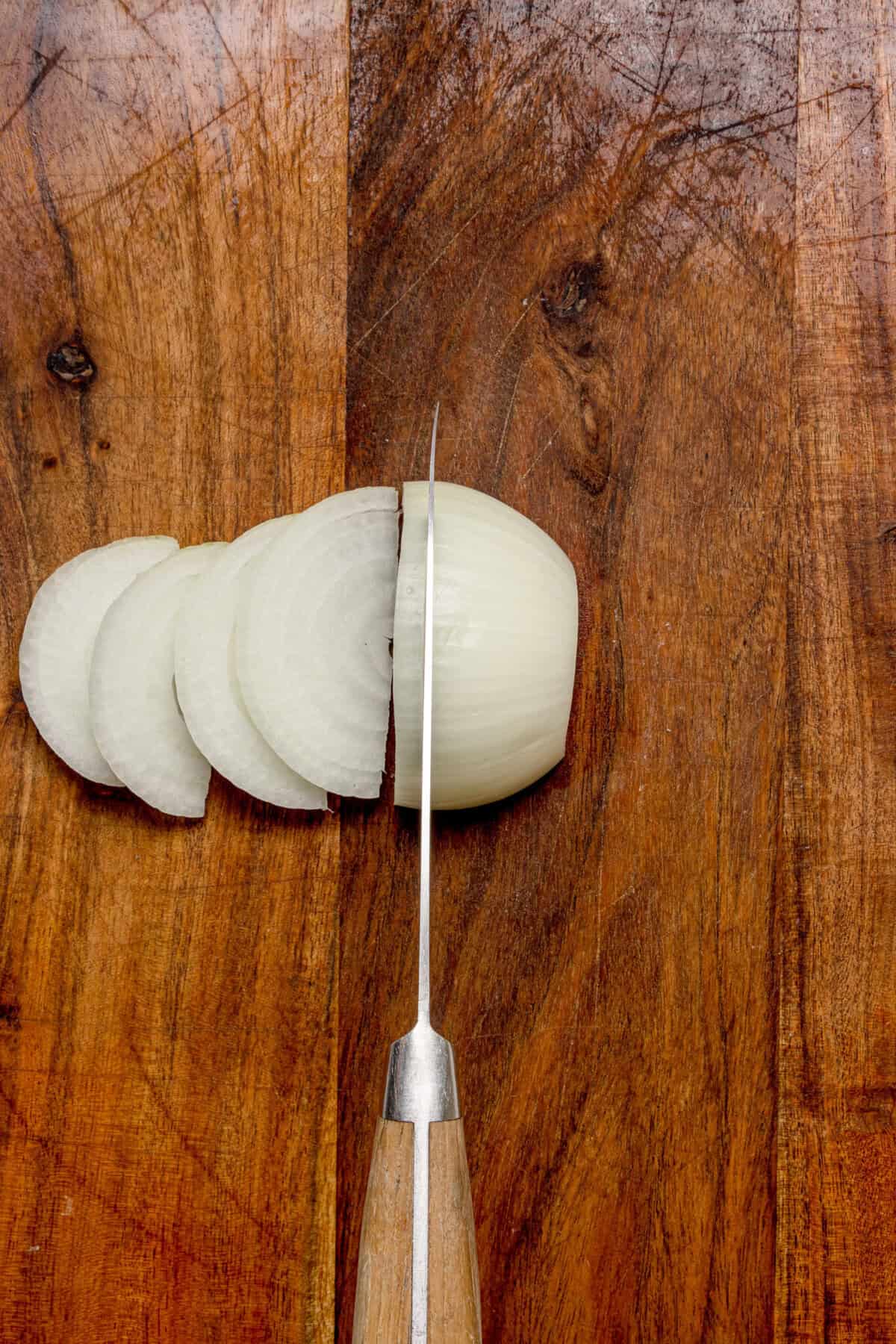
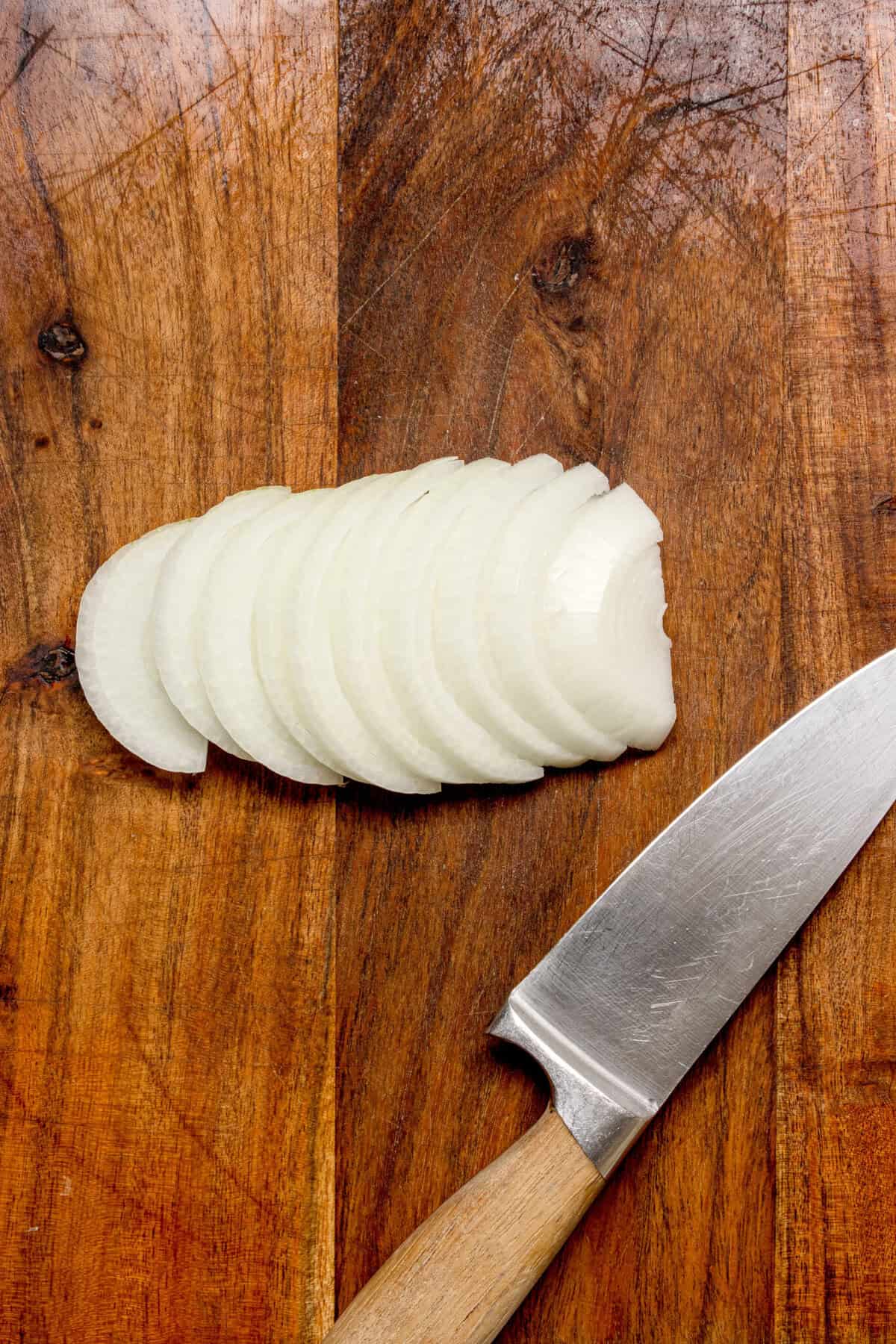
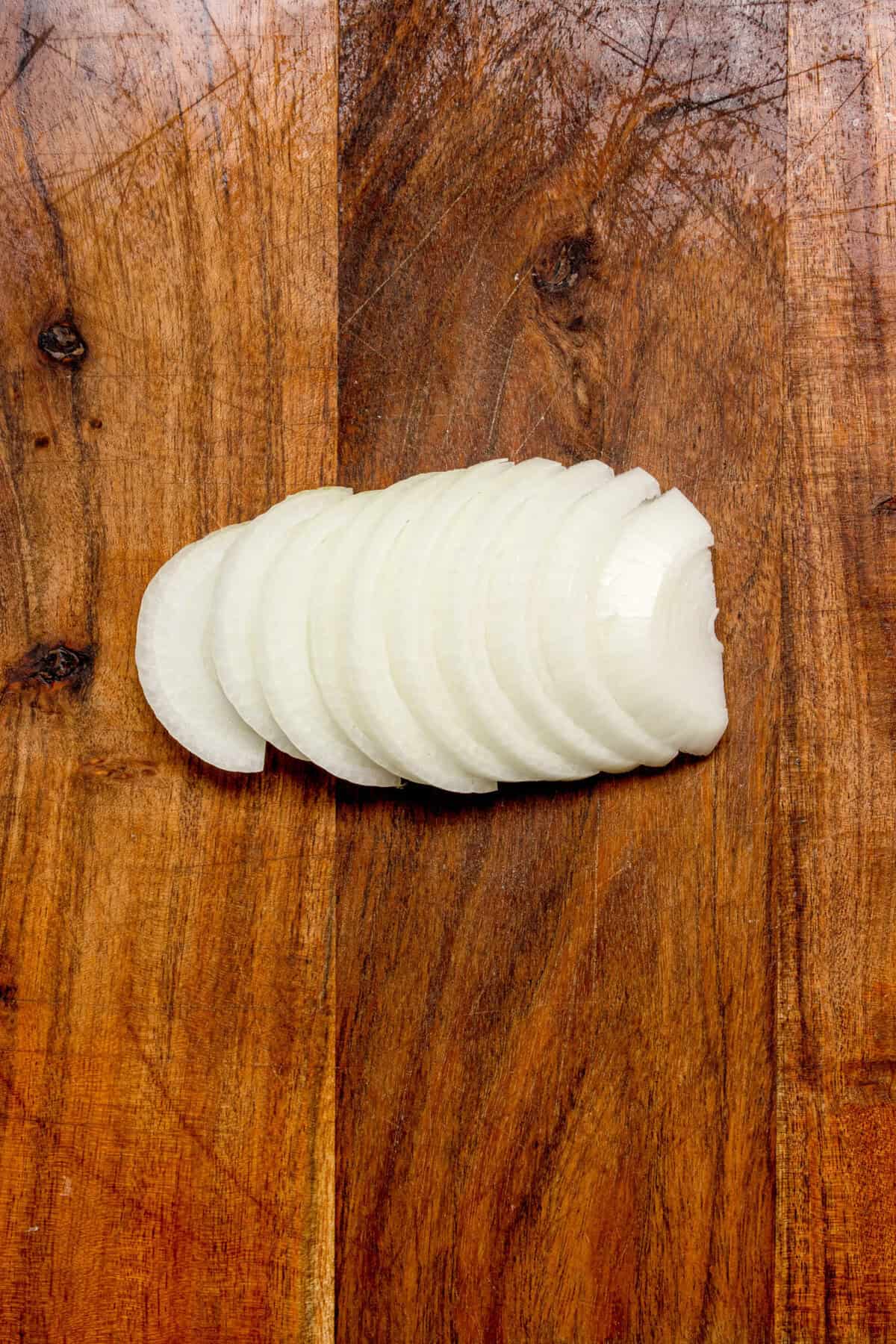
- Continue slicing until you have curved half-moon pieces.
- Adjust the thickness to your preference.
3. Julienne Onion Slices
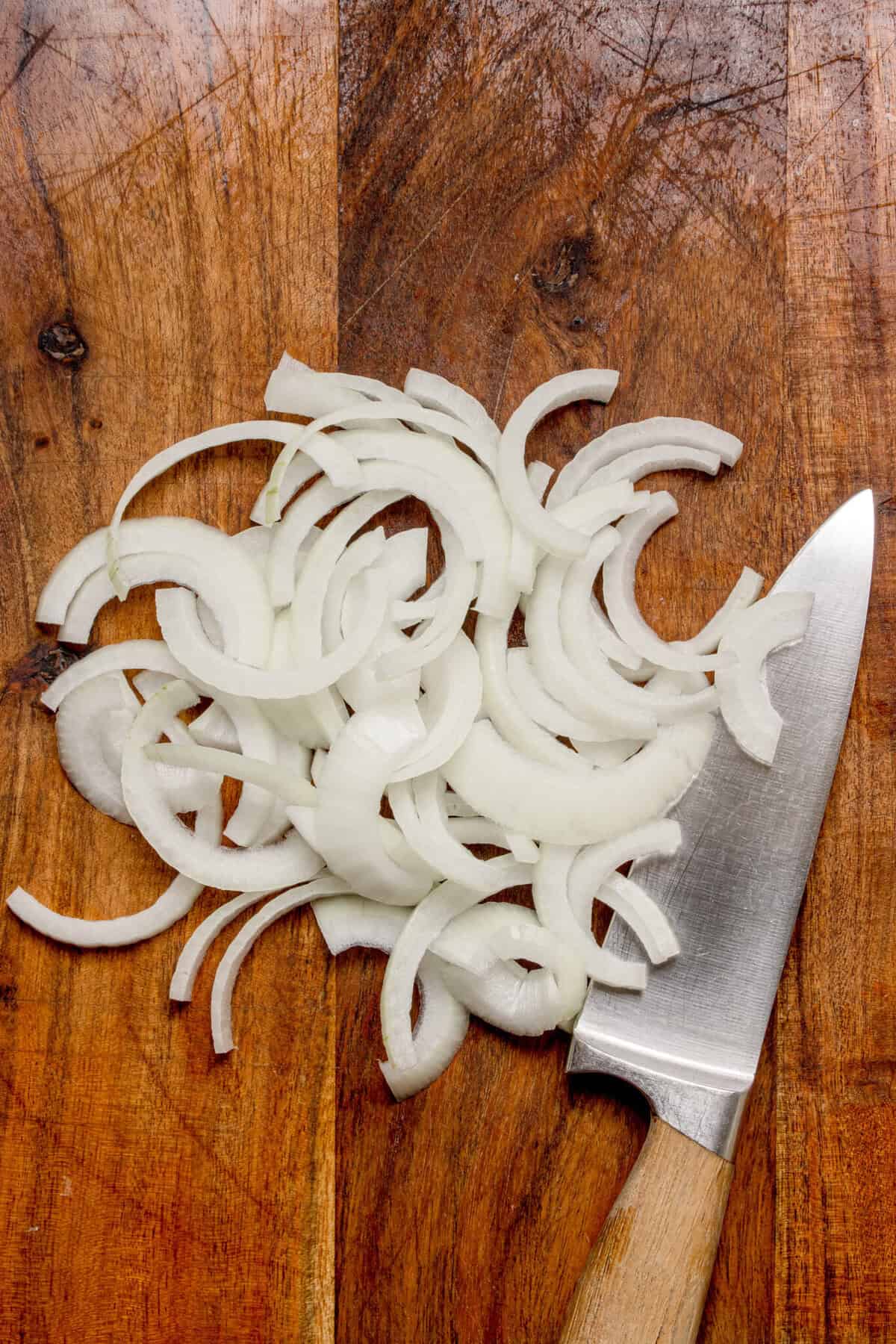
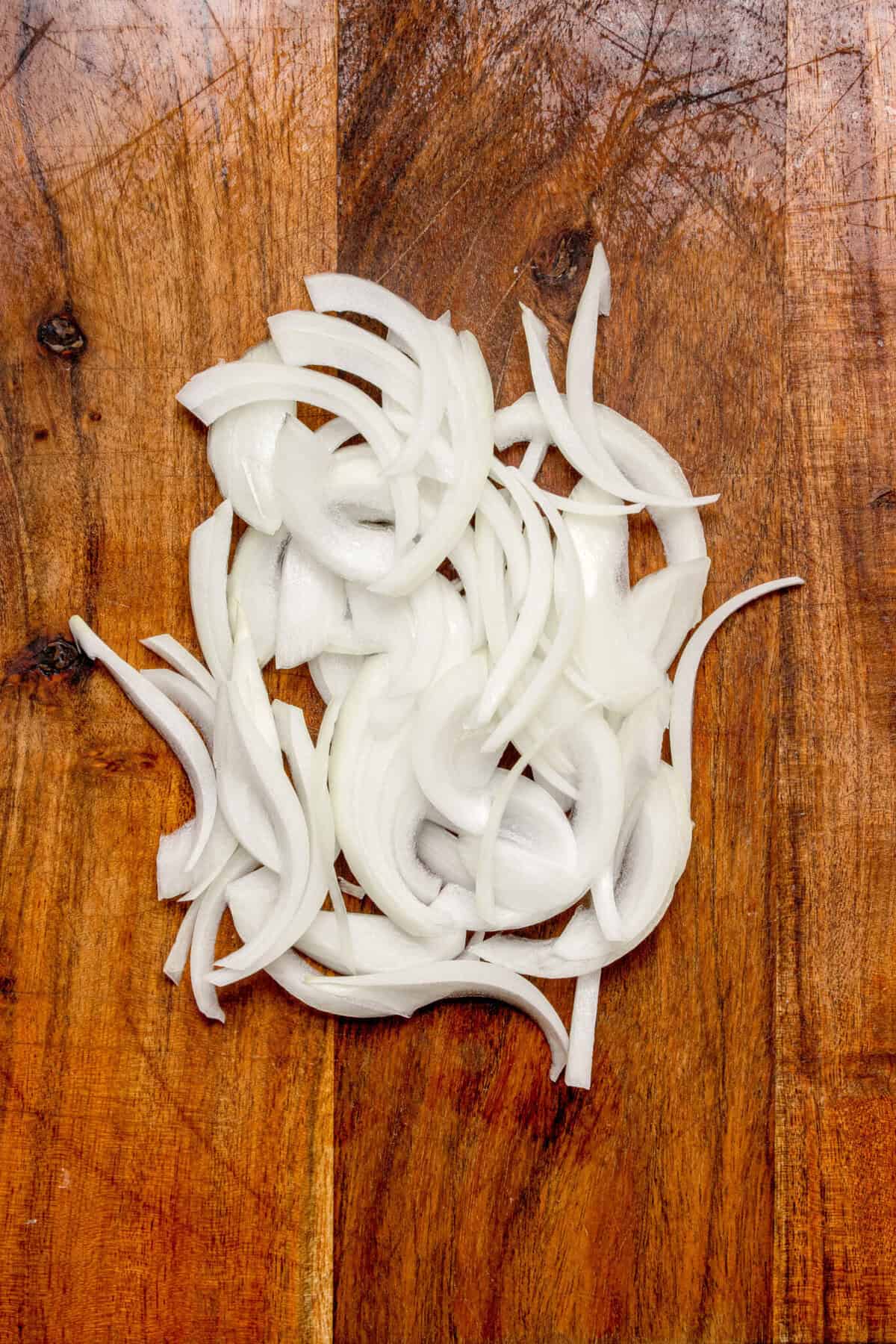
What They Look Like: Julienne onions are long, thin strips.
Best For:
- Stir-fries
- Sandwiches
- Tacos
- Sauteed onions
Thickness Tips
- Thin strips soften faster while cooking.
- Slightly thicker strips hold their shape better.
How to Julienne an Onion
Follow the standard prep steps above before starting.
- Place the onion half flat-side down.
- Starting at one side, slice thinly from stem end toward the root end.
- Continue making thin slices until the onion is fully cut into long strips.
- Cut the strips as thin or thick as you like.
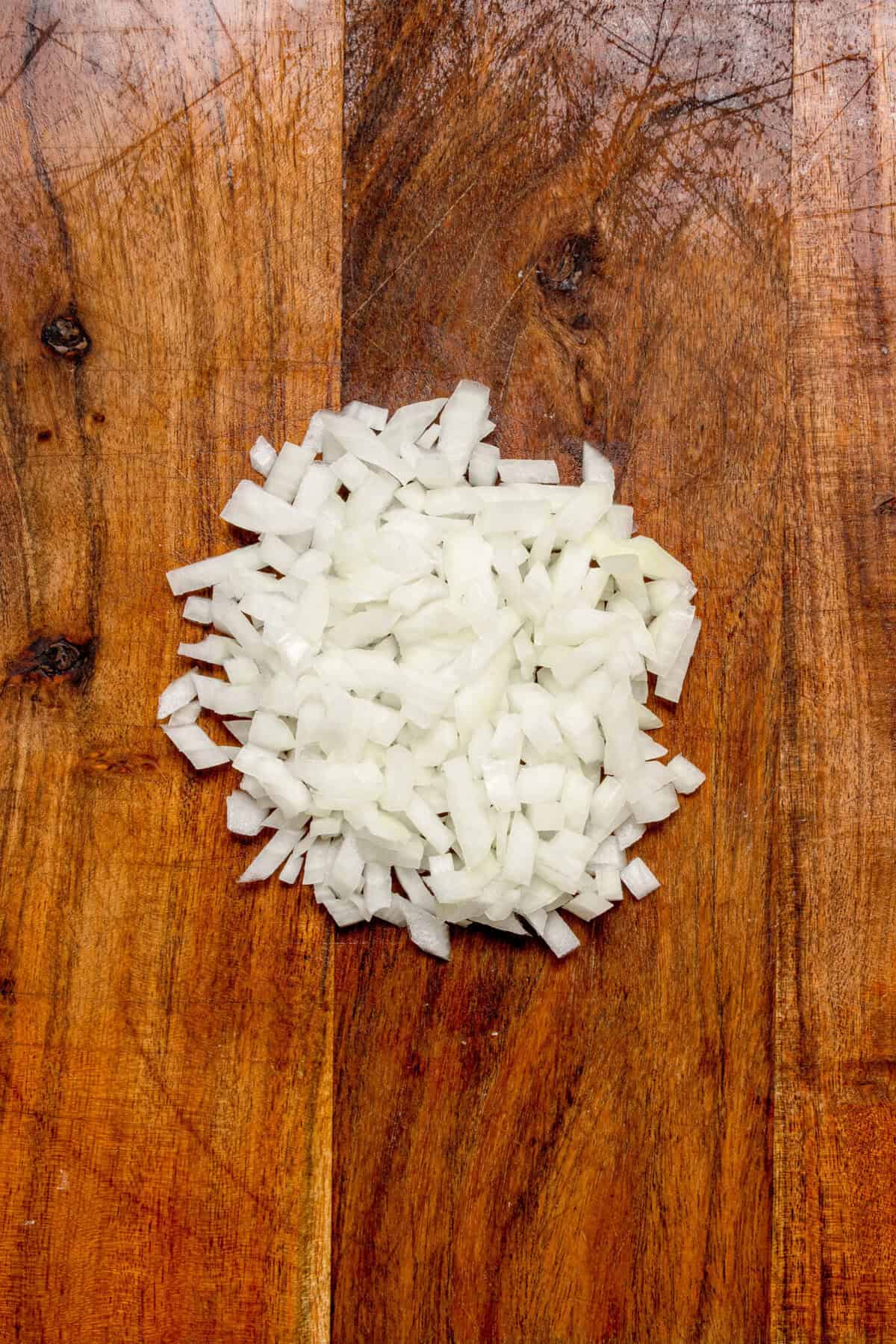
4. Diced Onion
What It Looks Like: Diced onions are small square-shaped pieces.
Best For
- Soups
- Sauces
- Tacos
- Casseroles
- Everyday cooking
Thickness Tips
The size of your dice depends on how you’ll use them.
- Large dice work well in soups and chili.
- Small pieces or a fine dice blend more easily into sauces and fillings.
How to Dice an Onion
Follow the standard prep steps above before starting.
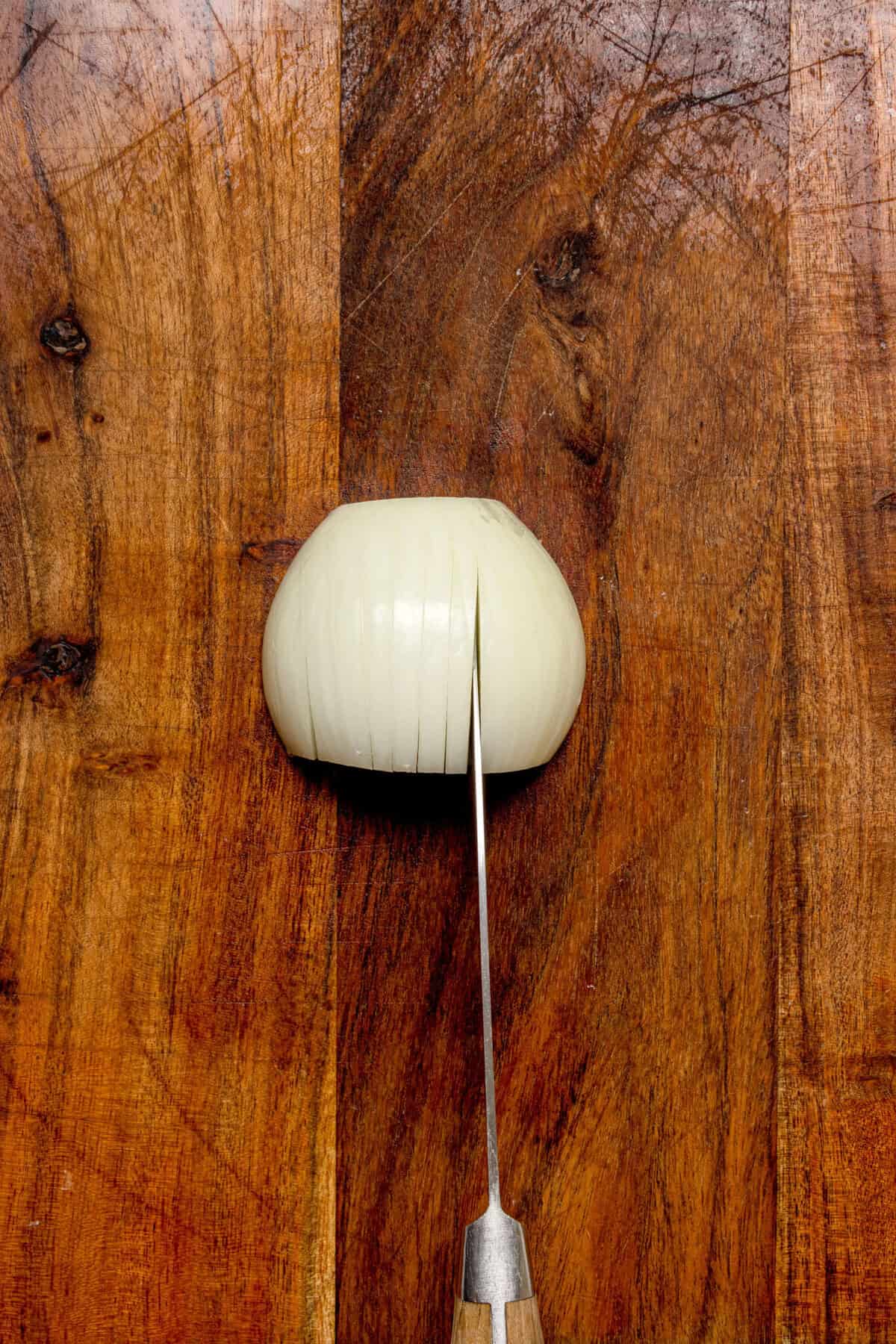
- Place the onion on a cutting board with the cut sides down.
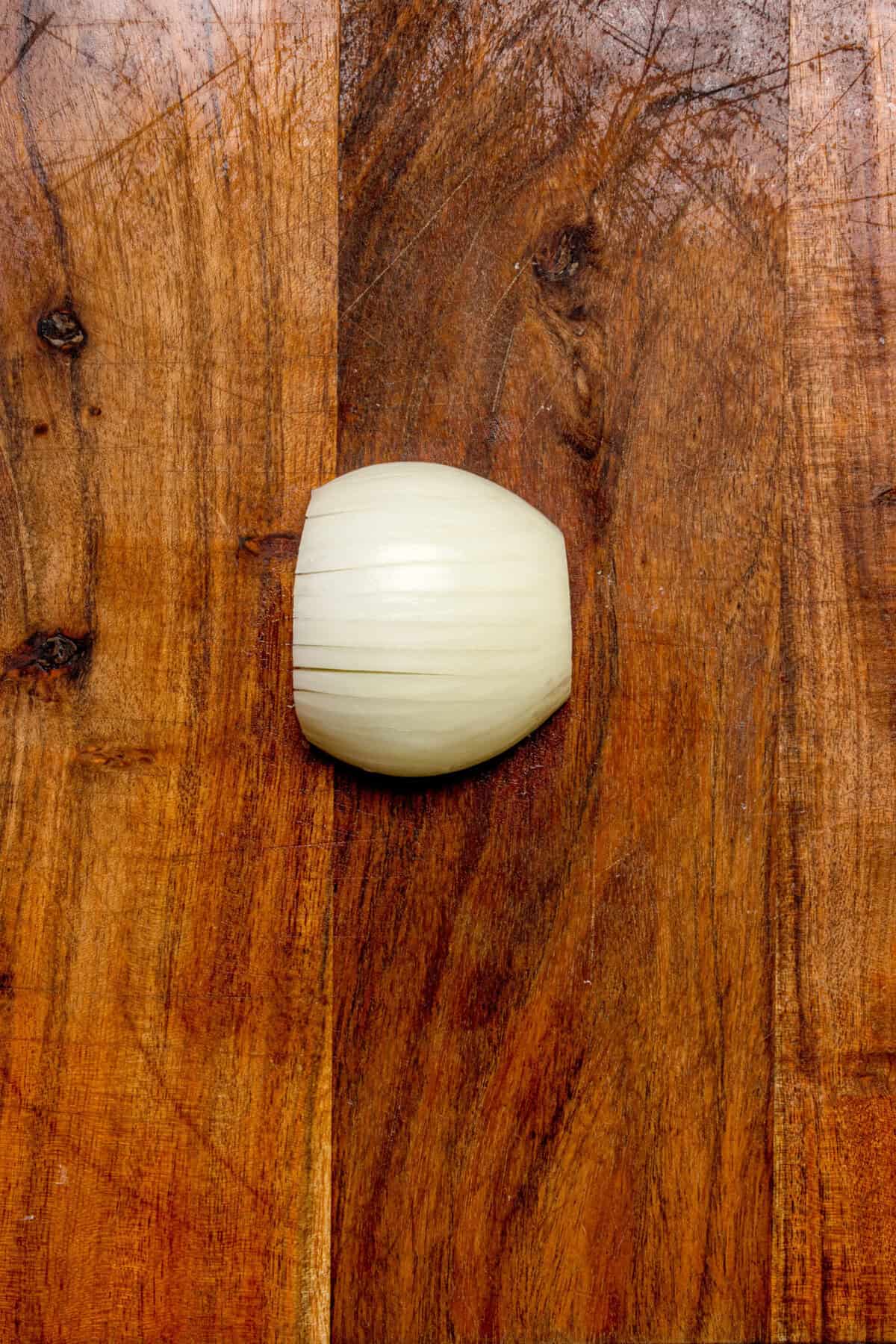
- Make a series of vertical cuts from the stem end toward the root end, stopping before cutting all the way through. This will hold the onion together and keep the pieces from falling apart.
- Turn the onion sideways.
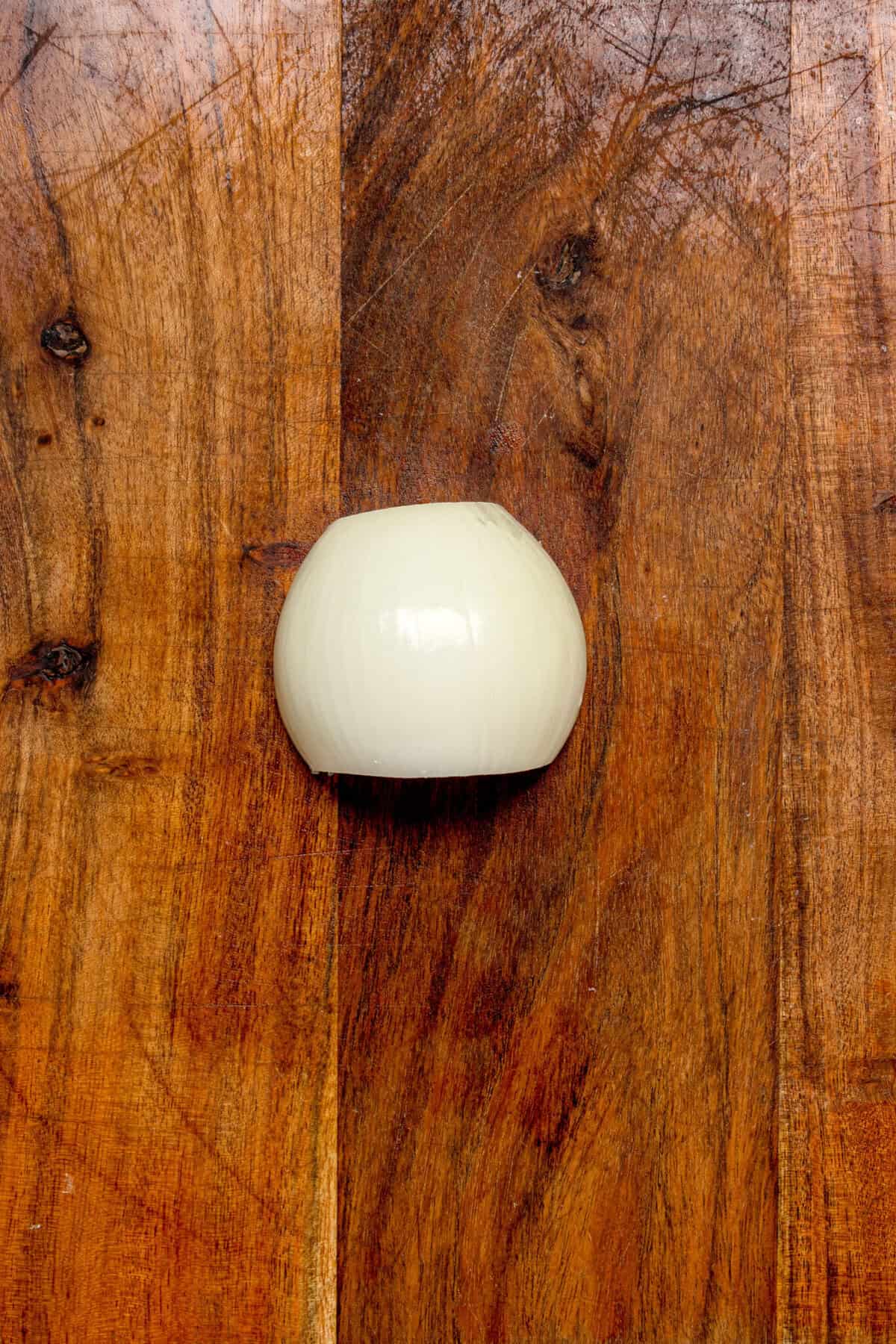
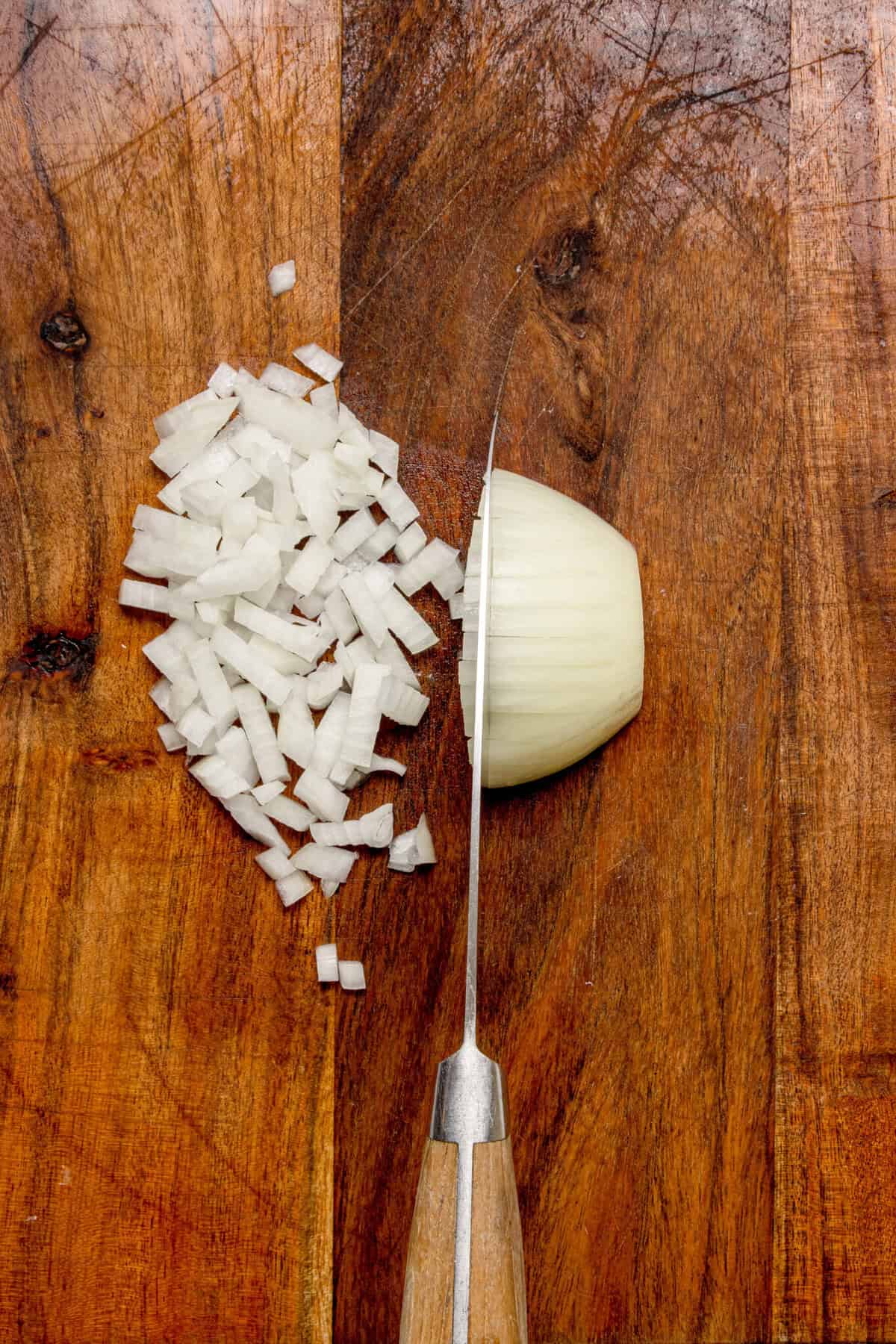
- Slice across the previous cuts to create similar size diced pieces.
- For a smaller dice, make the cuts closer together.
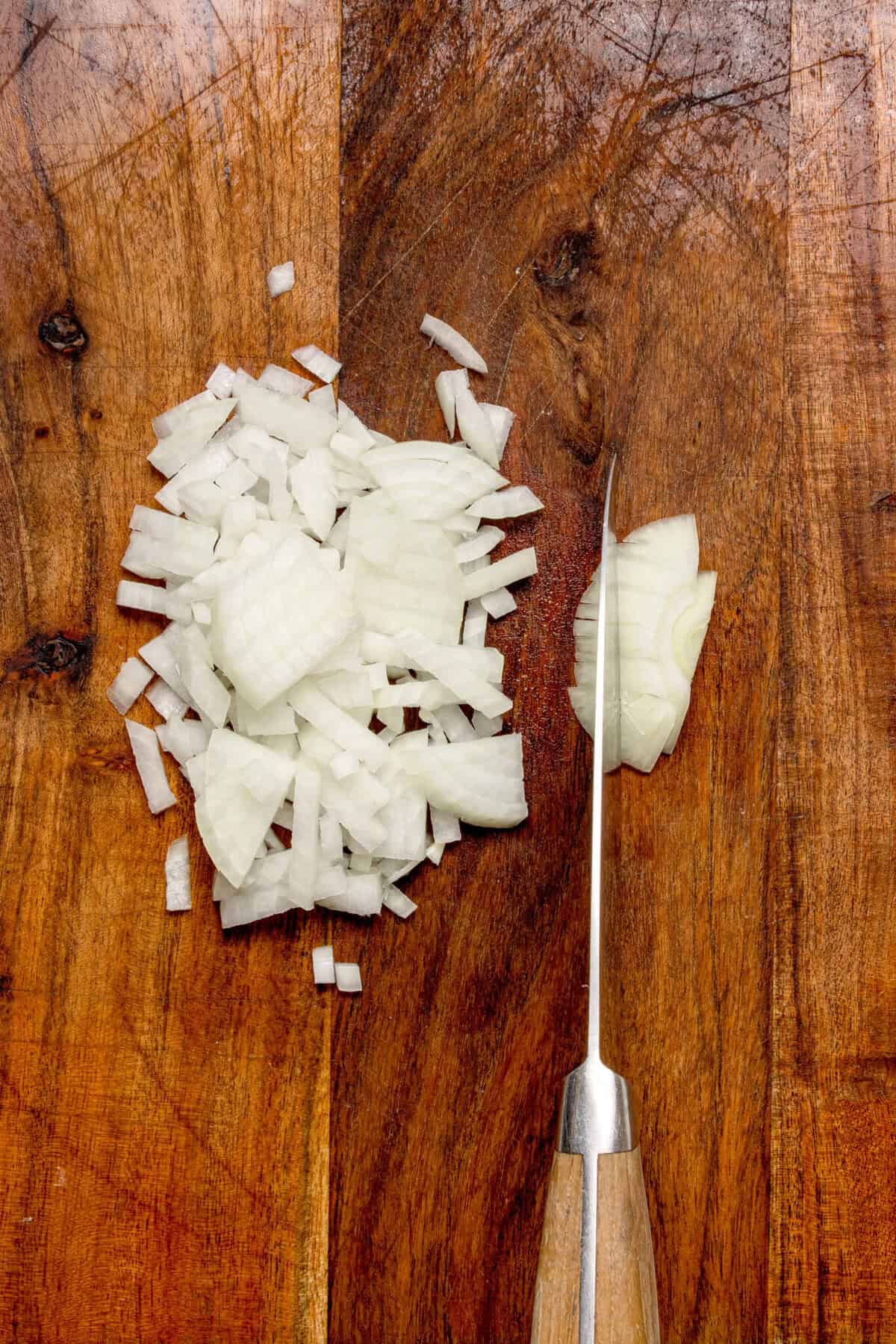
- Dice up the end piece with vertical and horizontal cuts.
5. Minced Onion
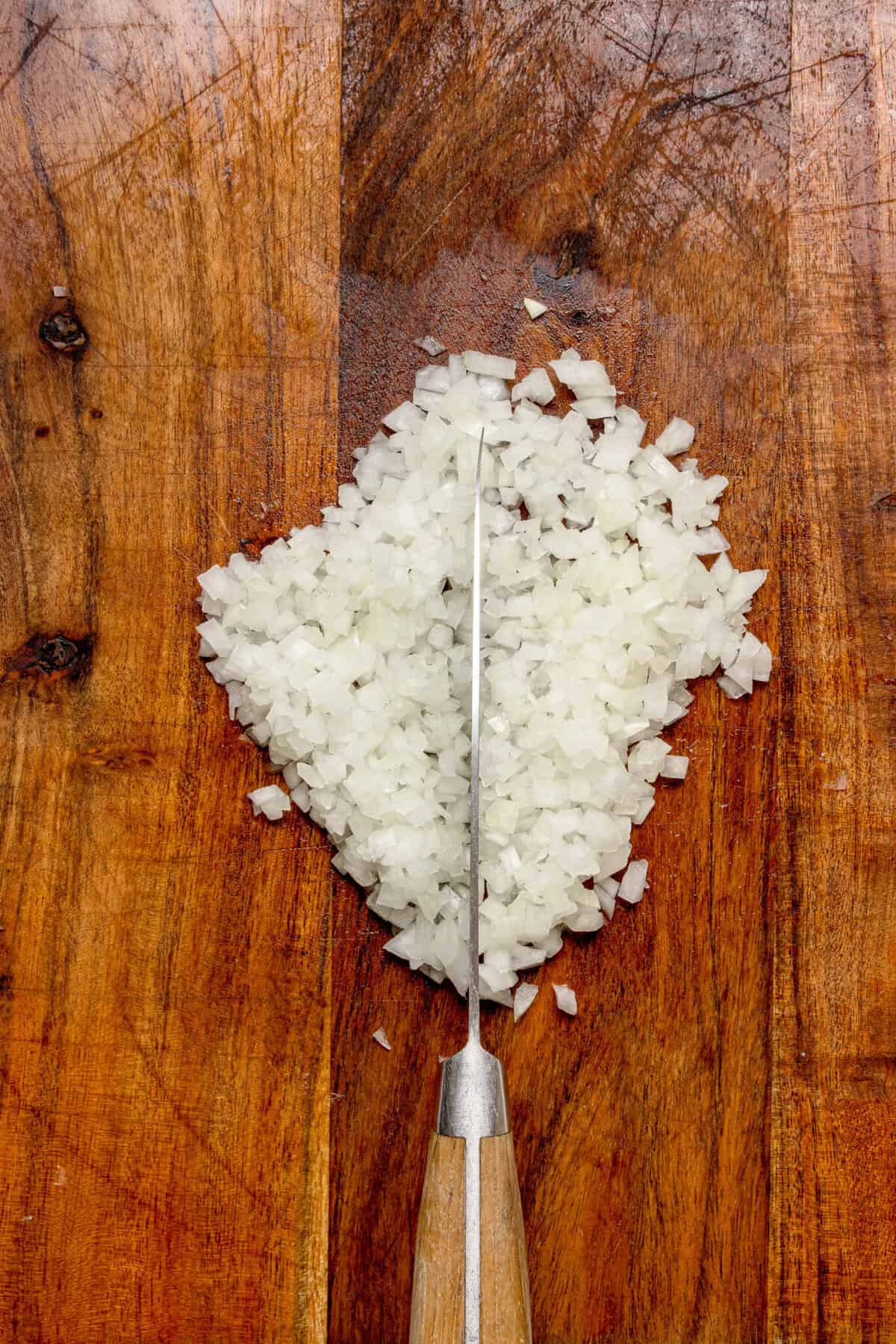
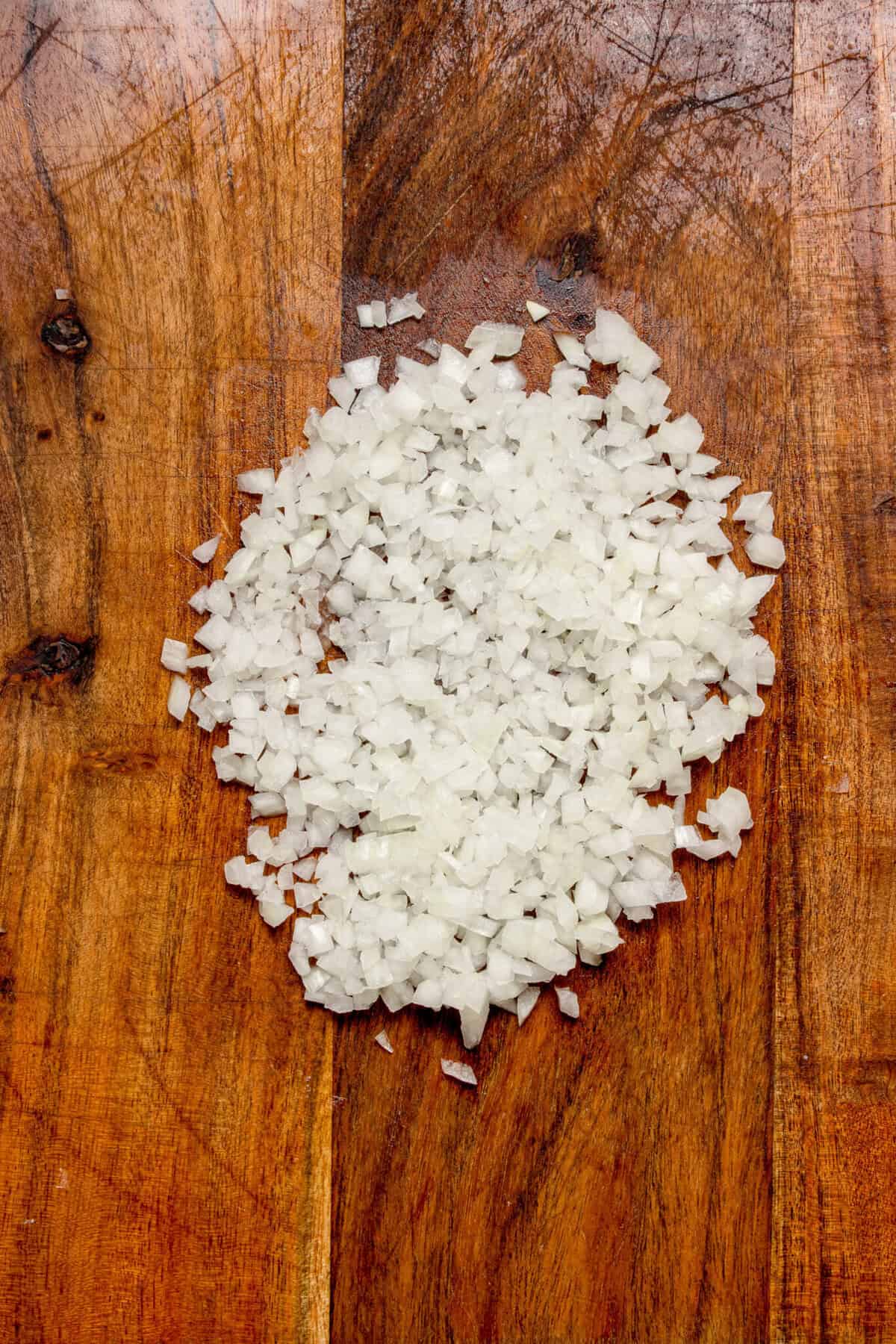
What It Looks Like: Minced onion is a very finely chopped onion. The smaller the pieces, the faster the onion blends into a dish.
Best For
- Sauces
- Salsa
- Marinades
- Dressings
- Meatballs
- Garlic and onion blends
How to Mince an Onion
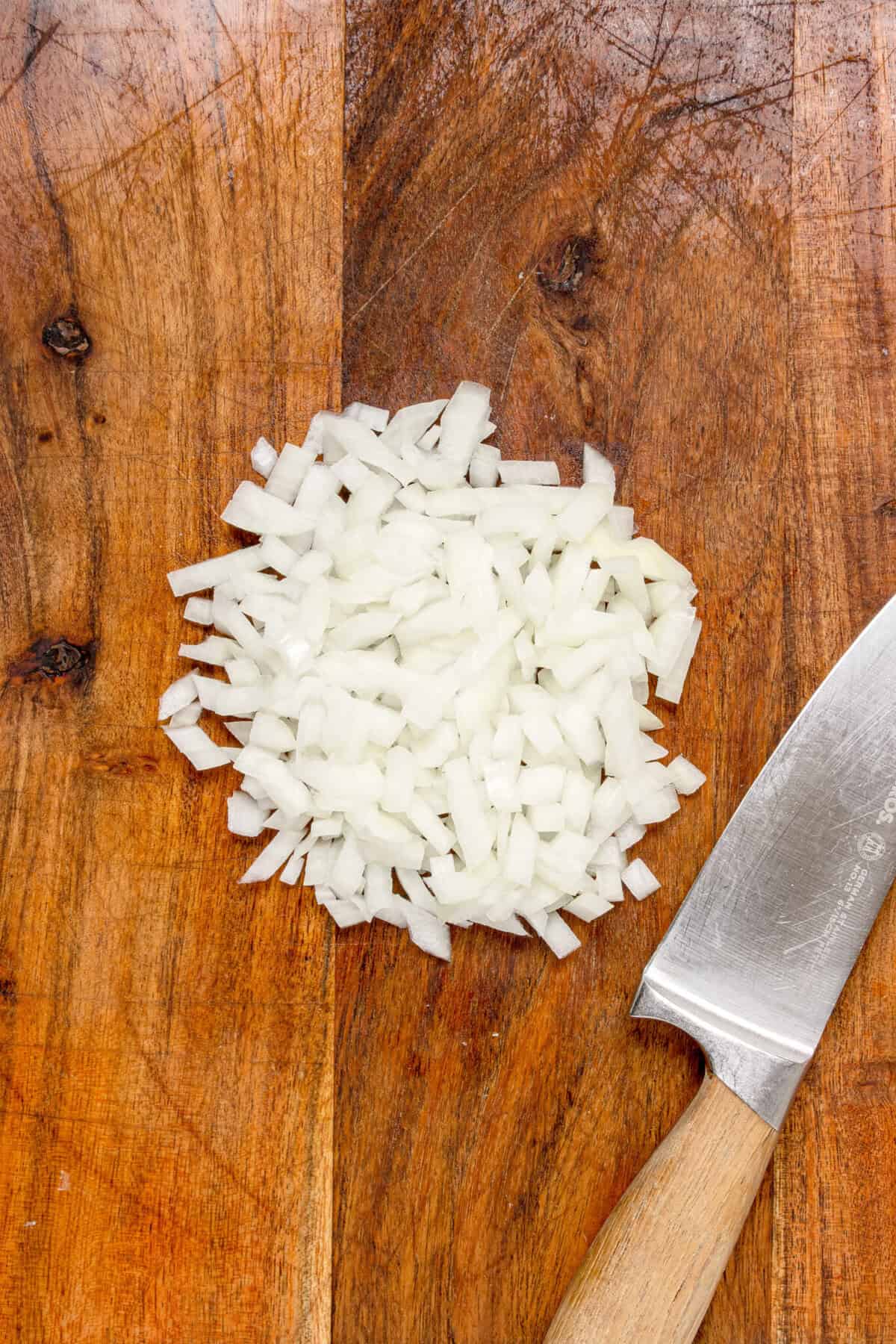
- Start by dicing the onion into a medium or small dice using the steps above.
- Gather the diced onion into a small pile.
- Place one hand on top of the knife near the spine for stability.
- Rock the knife back and forth over the onion several times.
- Continue chopping until the onion pieces become very small and fine.
6. Blended Onion
What It Looks Like: Blended onion becomes a smooth onion puree.
Best For
- Curries
- Marinades
- Sauces
- Braises
Important Tip: Blended onions release a lot of liquid, so they work best in recipes where the onion is meant to melt into the dish rather than add texture.
How to Blend an Onion
- Cut off both the stem end and the root end.
- Peel the onion and remove the first outer layer if it feels dry or tough.
- Cut the onion in half and lay it on it’s side.
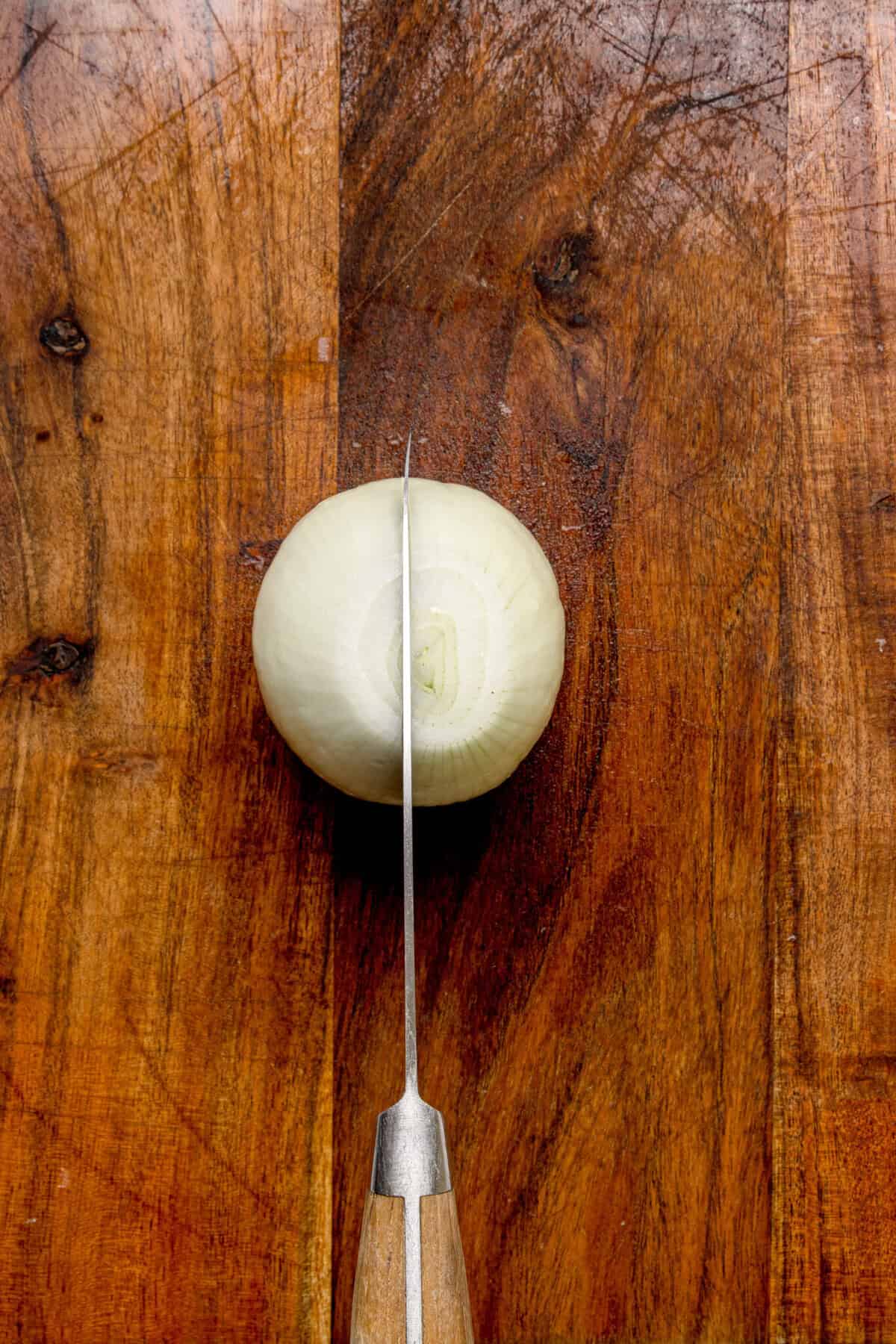
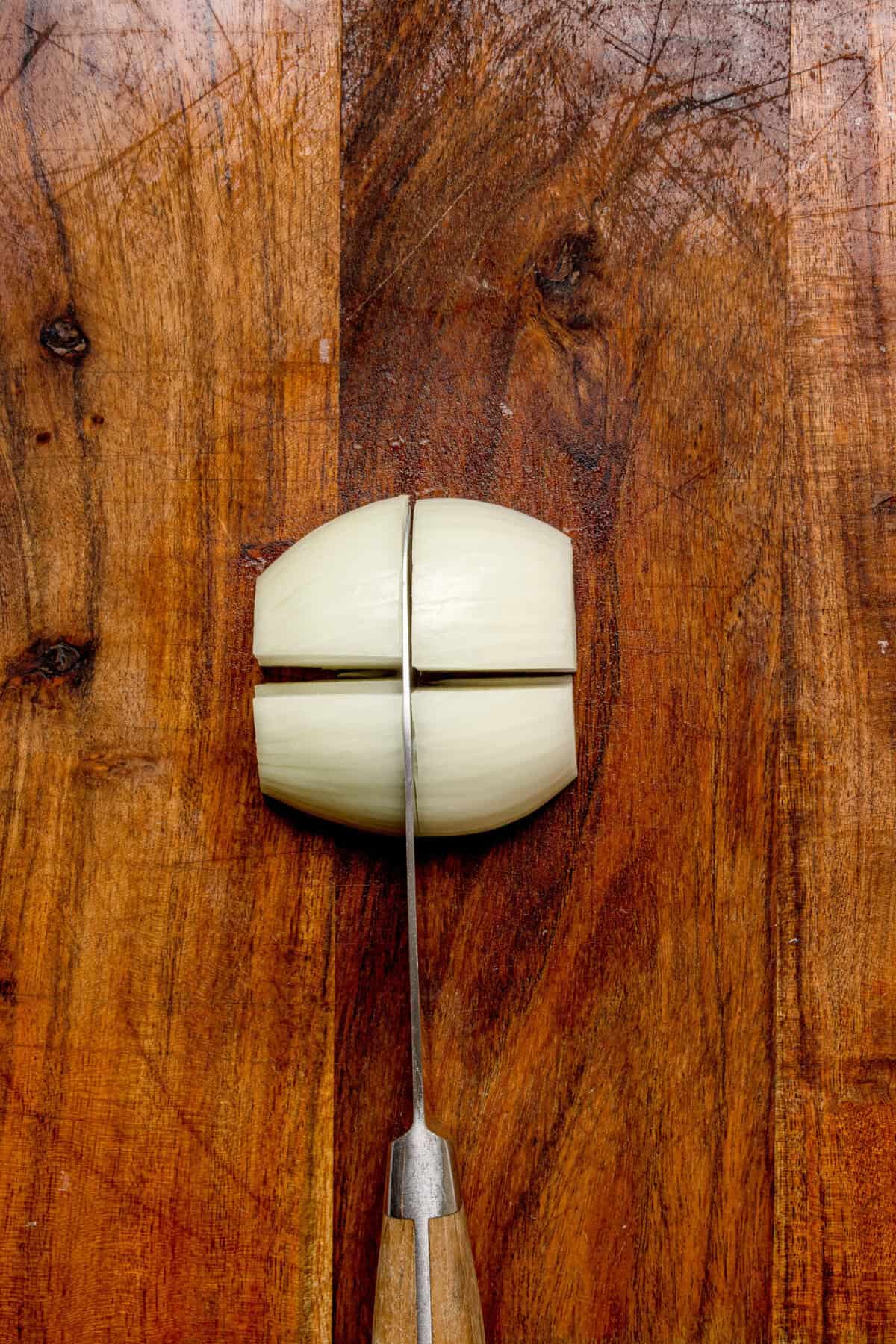
- Cut each half into large chunks.
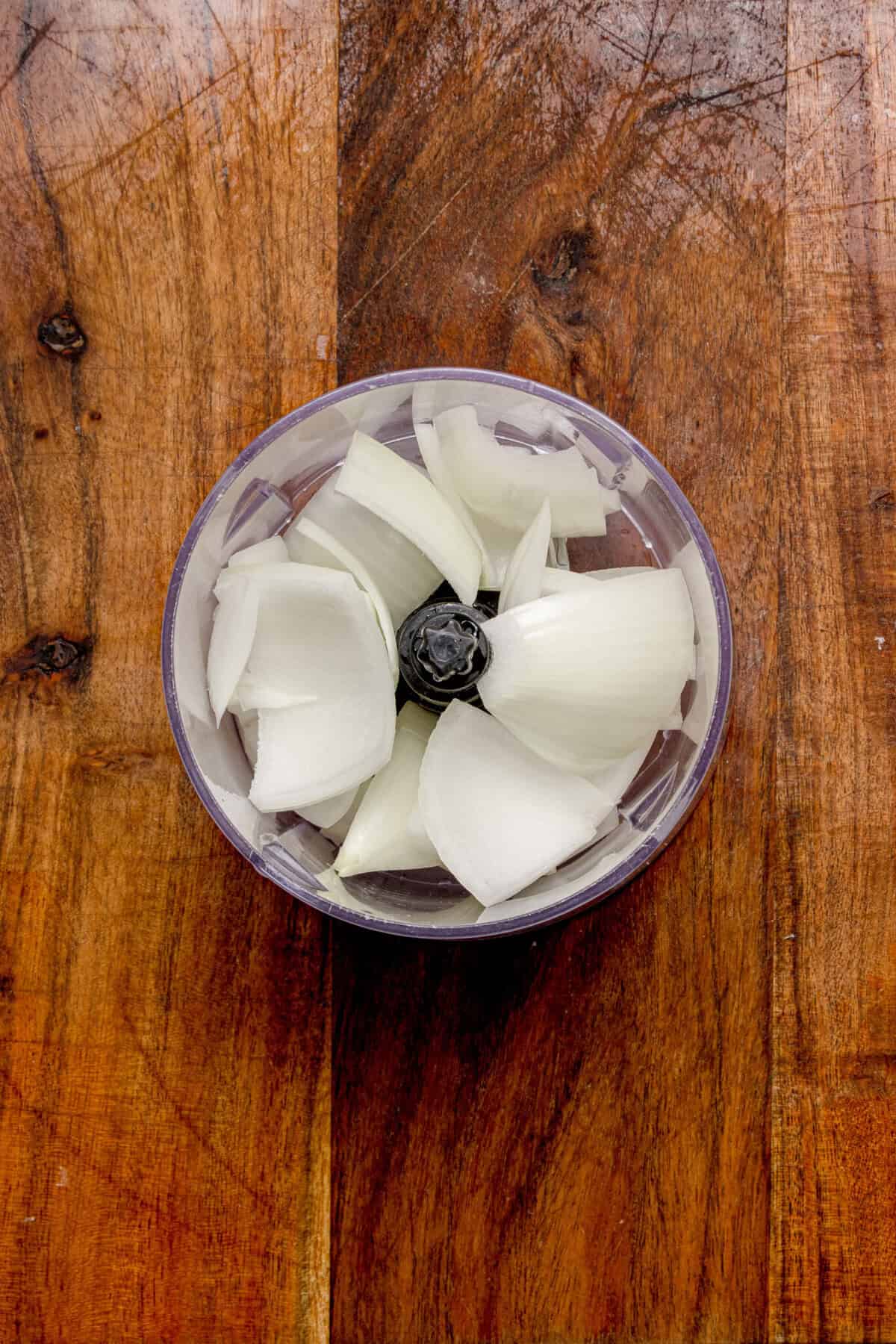
- Add the onion pieces to a blender or food processor.
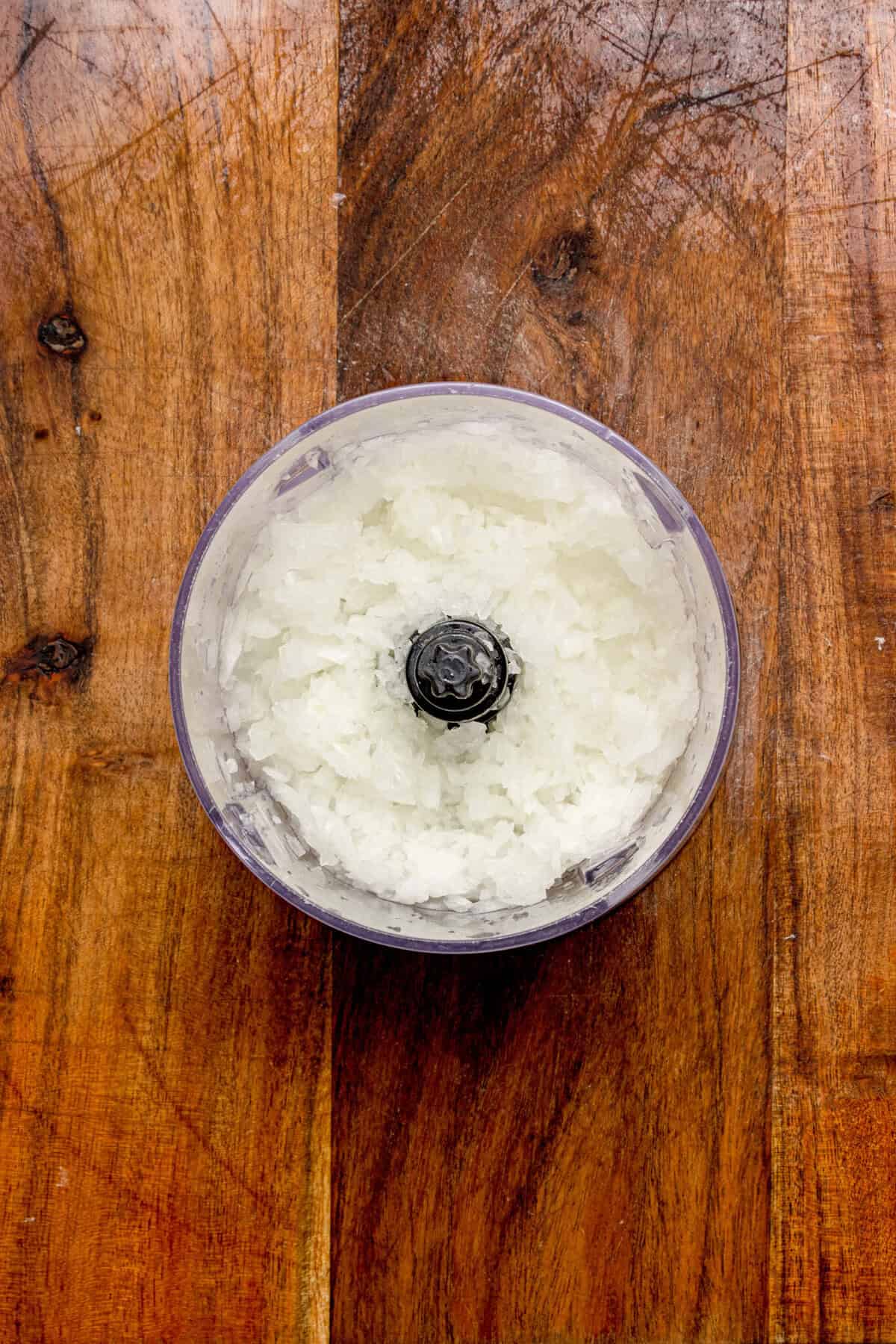
- Pulse or blend until the onion is smooth or until you reach the texture you prefer.
Pro Tip: Rub a little lemon juice on your hands after cutting onions to help remove lingering onion odors. Wash with soap and water afterward to remove the sticky residue and lemon scent.
Frequently Asked Questions
What Should I Do With Onion Peels?
If the onion peels are dirty, moldy, or damaged, simply throw them away or compost them. You can also wash them and save them for stock.
How Do I Store Leftover Onion?
Store them in airtight containers or freezer bags and refrigerate them. You can also wrap them in several layers of plastic wrap. Use them within 3 to 5 days.
For long term storage options, chopped onions can also be frozen in freezer-safe bags or containers for several months.
Store whole fresh onions in a cool, dry place with good airflow.
Recipes That Use Chopped Onion
- Easy 7 Layer Dip Recipe (Perfect 4th of July Dip!)
- Easy Crockpot Swamp Potatoes (Viral Recipe)
- The Best Taco Soup Recipe (Stove-top, Slow Cooker or Instant Pot)
- Easy Air Fryer Hot Dogs (10 Minute Meal)
- Creamy Tuscan Chicken Recipe (Easy One-Pan Dinner)
- Cheesy Broccoli Cornbread Recipe (with Jiffy Mix)
- Best Taco Meat Recipe (Easy Ground Beef Taco Meat for Taco Night!)






Thanks, this was helpful!